不止于衣:东方优雅“扣”响日常新韵
Beyond Attire: When Oriental Elegance Finds a New Voice in Everyday Life
通州大运河畔,晨光漫过“花纪年非遗工坊”的窗棂。一帘天青色绸缎轻垂,迟冰娜的手指上留着常年与丝线打交道留下的薄茧。绸缎在她指间绕三圈,轻轻一捻,一枚兰花扣的雏形便绽放——那灵巧的源头,藏在她儿时外婆的针线筐里。“小时候总蹲在外婆脚边,看她把一字扣缝在粗布衣襟上,那软乎乎的布艺疙瘩像个小秘密。那时只觉好玩,哪知后来会与这丝线缠成一辈子的缘分。”
By the Grand Canal in Tongzhou District, morning light spills through the window lattice of the workshop. Ms. Chi Bingna’s hands, marked by years of working with thread, gently shape a strand of sky-blue silk. Wrapping the silk three times around her fingers and giving it a gentle twist, the prototype of an orchid knot blooms in her palm—a skill she first saw in her grandmother’s sewing basket. “I used to squat by my grandmother, watching her sew simple knotted buttons onto coarse clothes. Those soft little fabric bumps were like little secrets nestled in the fabric. I just thought it was fun back then, never imagining thread I’d be tied to these threads for a lifetime.”
留学生颜爱玲欣赏精美非遗盘扣作品
International student Eliz appreciates these exquisite pankou works
近日,北京第二外国语学院留学生颜爱玲专程前来体验盘扣制作。她学着迟冰娜的样子,用指尖拈起蓬松的棉花,一点点填进绣好纹样的边框中,看着原本松散的布料在掌心中渐渐丰盈、立体起来。“原来这么小的一枚扣子里,还藏着‘填’与‘塑’的学问!”颜爱玲的赞叹里,盛满了对盘扣技艺最直观的领悟。
Recently, Eliz, an international student from Beijing International Studies University, made a special visit to experience traditional Chinese knot button making. Following Chi Bingna’s guidance, she pinches fluffy cotton with her fingertips, carefully stuffing it bit by bit into an embroidered silk shape, watching the loose fabric gradually become plump and three-dimensional in her palm. “Who knew such a tiny button held the principles of ‘stuffing’ and ‘shaping’!,” Yan’s exclamation brims with a direct appreciation for the technique.
盘扣的历史,可上溯至结绳记事的远古。其形态随着朝代更迭而日益丰富:唐代用作官服扣件,样式简洁规整;宋代融入了梅、兰等素雅纹样,贴合文人风骨;明代渐现龙凤、祥云等吉祥图案,工艺愈趋精巧;至清代,伴随旗袍盛行,盘扣更是镶边嵌宝、题材多样,成为体现身份与文化寓意的“衣上风景”。从实用衣扣升华为艺术符号,这丝线编织的“方寸世界”,始终呼应着千年华裳的脉动。
The Chinese pankou (knot button) has roots in the ancient practice of recording events by tying knots. Their forms grew richer with each dynasty: used as functional and neat fasteners on official robes in the Tang Dynasty; ncorporating elegant patterns like plum blossoms and orchids in the Song Dynasty to reflect scholarly aesthetics; seeing the gradual emergence of auspicious motifs like dragons, phoenixes, and cloud in the Ming Dynasty, with craftsmanship becoming ever more refined; reaching its zenith in the Qing Dynasty with the popularity of the qipao, where buttons became adorned with piped edges, inlaid jewels, and diverse themes, transforming into “wearable scenery” that conveyed status and cultural meaning. Evolving from practical fasteners to decorative art, this “miniature world” woven from silk thread has always pulsed in rhythm with the flow of Chinese attire through the millennia.
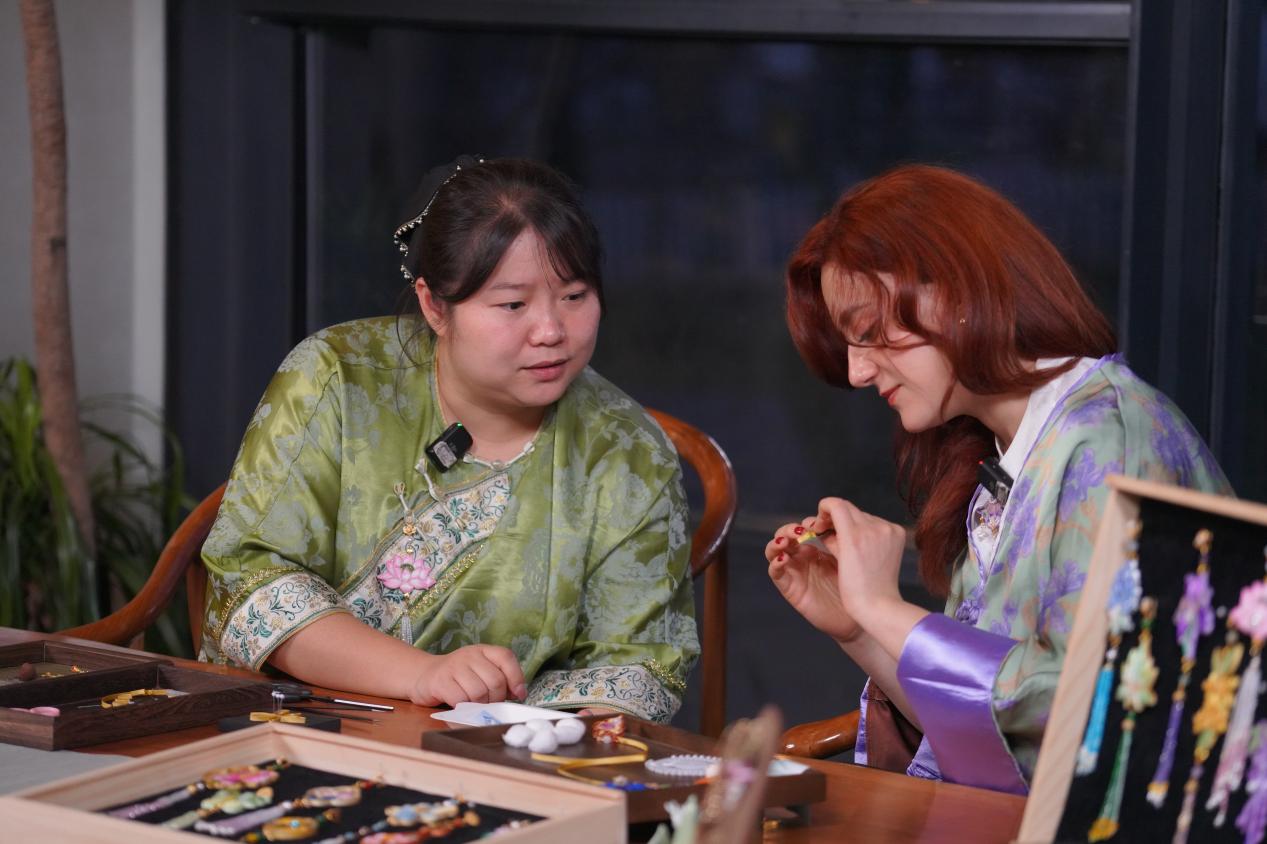
迟冰娜指导留学生颜爱玲体验盘扣制作
Chi Bingna instrusts Eliz in the basics of making pankou
迟冰娜早年热衷插花,见绒花、点翠等非遗饰品备受青睐,便萌生了将盘扣做成花卉纹样饰品的想法——鲜花易谢,盘扣之花却可恒久佩戴,让绽放的美凝结于丝缕之间。“想成为一名合格的盘扣师傅,至少需潜心习练一年。”为精进技艺,她遍访名师、潜心钻研,深知一枚上乘的盘扣,需融面料认知、配色美学、填充技巧于一体,每一步都离不开岁月的沉淀。
Chi Bingna, with an early passion for flowers arranging and noticing the popularity of intangible cultural heritage accessories like velvet and kingfisher feather art, conceived the idea of crafting pankou into floral-patterned jewelry – while fresh flowers wilt, silk blossoms can be worn eternally, their beauty crystallized within the threads. “It takes at least a year of dedicated practice to master the basics of pankou,” she says. To refine her skill, she sought out masters,and immersed herself in study, understanding that a beautiful pankou demands integrated knowledge of fabric, color harmony, and precise technique— each step reliant on the sedimentation of time.
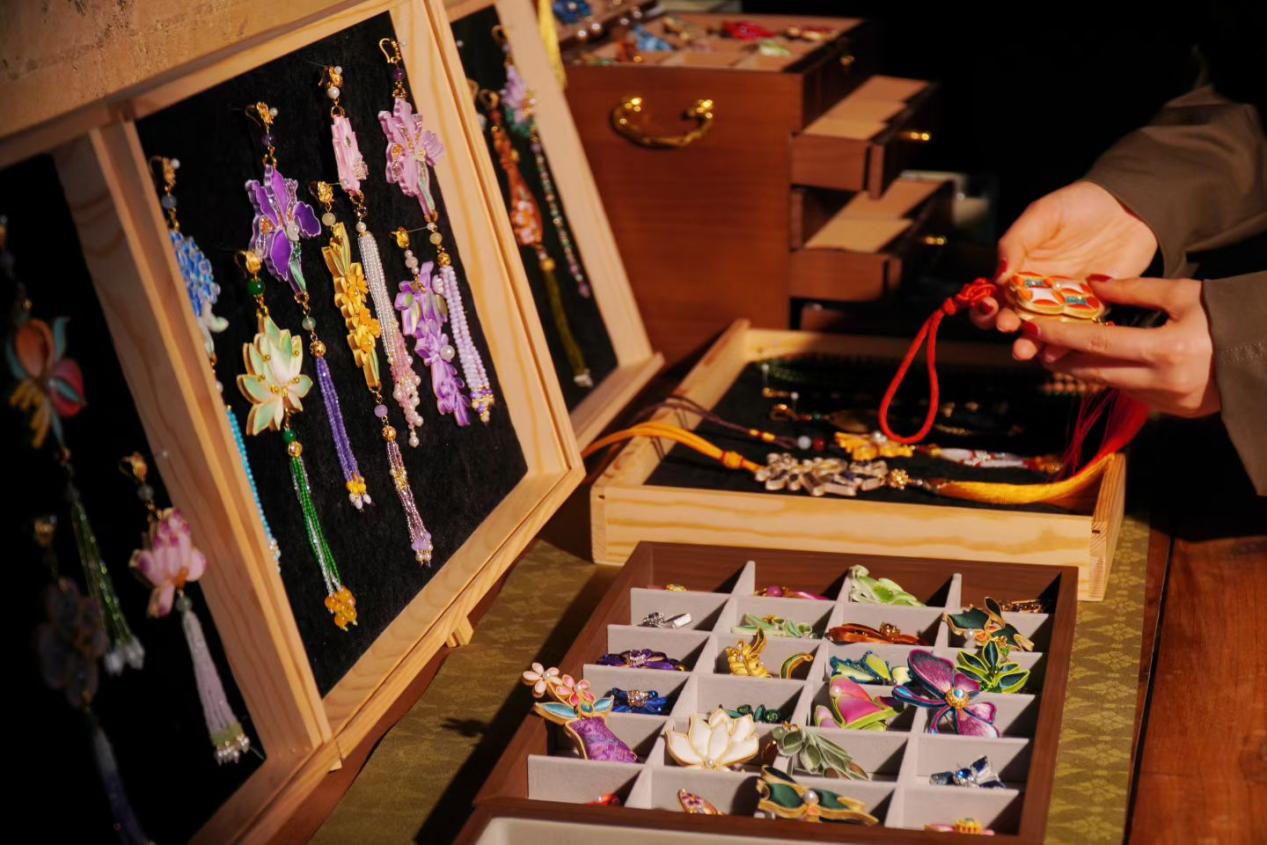
传承之外,迟冰娜更懂“活化”之重。在她看来,非遗不该被束之高阁落灰,而要融入日常、为人所用,方能真正“活”下去。如今,盘扣已不再局囿于衣襟,而是在她手中化作万物可搭的文创:项链、耳环、发夹、胸针、包饰、车挂,乃至画作。这枚丝线编织的“小世界”,正以万千姿态走进生活,为日常增添一抹东方雅韵。
Beyond preservation, Ms. Chi understands the importance of “revitalization”. In her view, the intangible cultural heritage shouldn’t be left to gather dust on a high shelf but must integrate into daily life and be used to truly stay “alive”. Today, pankou is no longer confined to garment fronts. Under her hands, pankou transforms into versatile cultural-creative products—necklaces, earrings, hairpins, brooches, bag accessories, car hangings, and even framed art. This “small world” woven from silk is finding new way as a touch of oriental elegance to the everyday life.
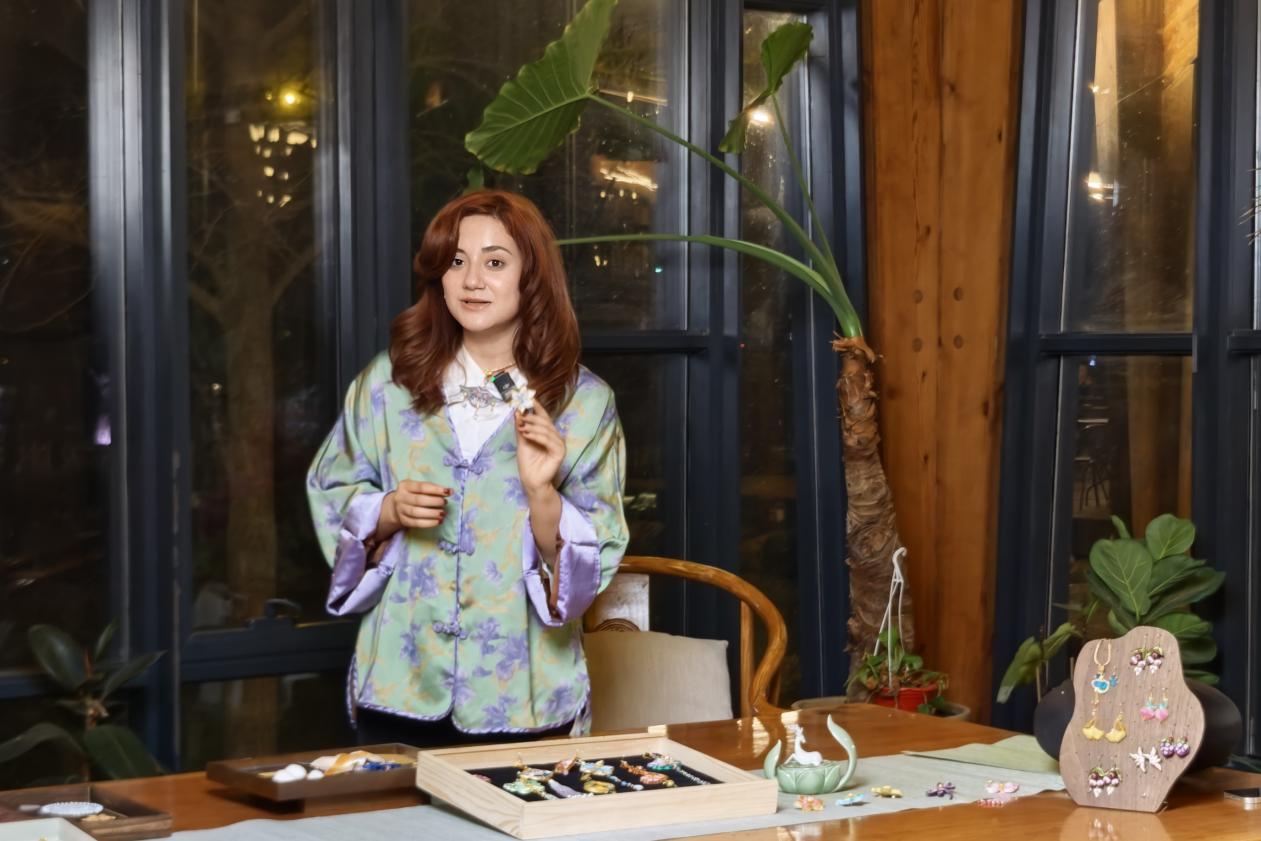
颜爱玲要把亲手制作的盘扣作为礼物送给好友
Eliz plans to give this handcrafted pankou as a gift to her friend
为让更多人亲近盘扣,迟冰娜已累计开展百余场非遗讲座与技艺研讨会。她的教学讲究方法:让体验者从填充棉花入手,降低初学门槛,并支付给体验者相应工时费,使人在成就感中渐入佳境。她还与社区合作,培训附近女工参与盘扣的简易工序,既缓解了工坊的产能压力,又为宝妈等群体提供了灵活就业机会。
To bring pankou closer to more people, Ms. Chi has conducted over a hundred ICH workshops and lectures. Her teaching methodology is thoughtful: she starts beginners with the manageable task of padding, lowering the entry barrier, and even offers a small stipend for their time, allowing them to build confidence and accomplishment. She also collaborates with communities, training local women in simpler steps, easing production demands while providing flexible employment opportunities for groups like stay-at-home mothers.
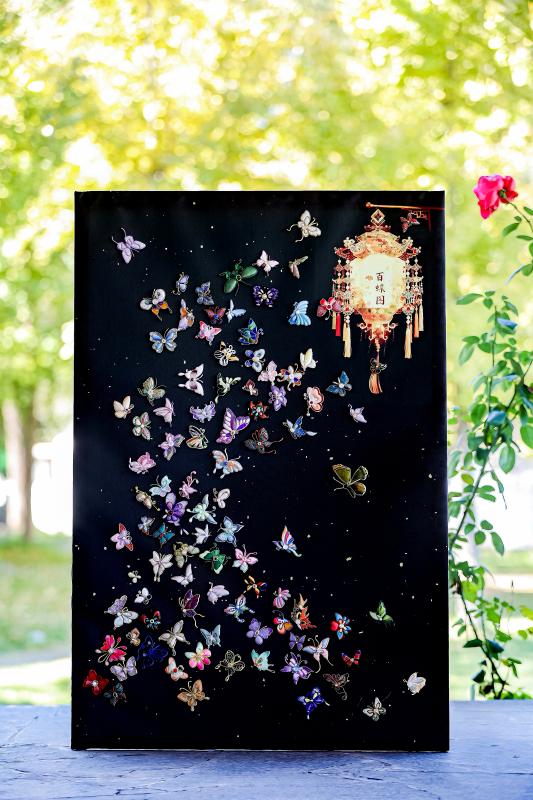
获得非遗创新金奖作品《百蝶图》
The ICH Innovation Gold Medal piece “Hundred Butterflies”
随着市场需求增长,迟冰娜联合京、沪、苏、浙、新等九地非遗盘扣老师组建协作联盟。老师们各怀绝技:“蝴蝶大王”“葫芦大王”“云间大王”专精纹样,亦有专注十二花神设计的老师,各有研究课题与特色产品。闲时共研新纹样、试新材料,忙时分工协作——曾获非遗创新金奖的《百蝶图》,便是由十位老师各制十只蝴蝶合力而成,将于一月在国家体育场亮相。
With growing market demand, Ms. Chi united with pankou masters from nine regions including Beijing, Shanghai, Jiangsu, Zhejiang, and Xinjiang, forming a collaborative alliance. Each master possesses unique expertise: specialists in butterfly, gourd, or cloud patterns, as well as those dedicated to designs like the Twelve Flower Goddesses, each with their research focus and signature products. They collaborate on researching new patterns and testing new materials; they also divide workload for large projects. The award-winning “Hundred Butterflies” piece, for which each of ten masters made ten butterflies, is set to be displayed at the National Stadium in January.
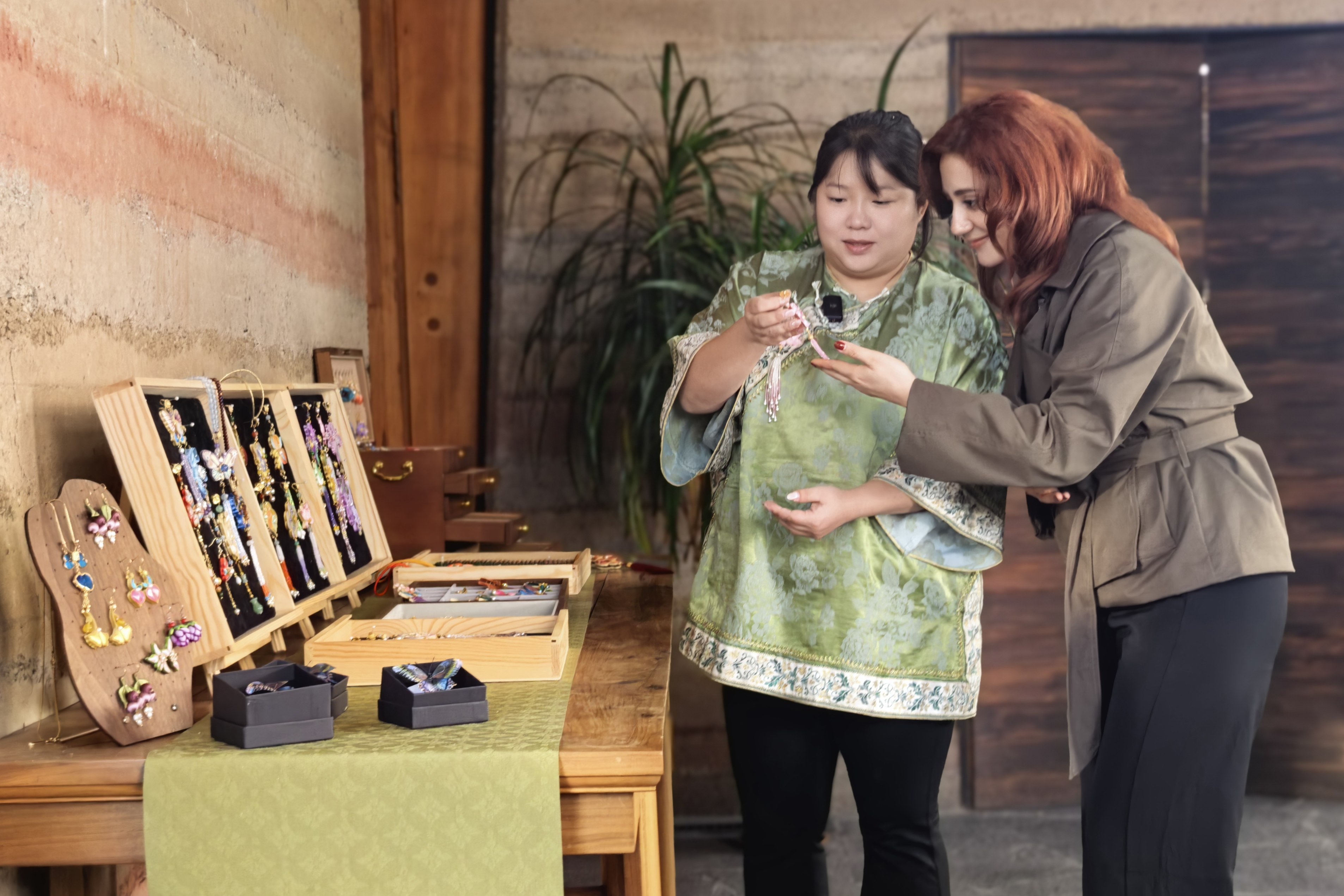
迟冰娜向留学生颜爱玲展示盘扣饰品
Chi Bingna introduces pankou works to Eliz
工坊也承接各类定制订单,曾为潭柘寺、万寿寺设计特色盘扣,并推出马年主题、广西壮锦与新疆锦缎民族风系列,备受市场欢迎。在服贸会、深圳礼品展等平台上,其产品吸引了众多海内外客商,订单络绎不绝。迟冰娜目光不止于国内。她还接待过诸多“一带一路”沿线国际友人与留学生,他们学习制作,并将盘扣作为伴手礼带回国。她期盼未来能将盘扣带向更广阔的世界,让中国丝绸的工艺之美与寓意之深,随这枚方寸之物走向世界。
The workshop also takes custom orders, having designed special pankou for historic temples like Tanzhe Temple and Wanshou Temple, and launched themed collections like the Horse Year theme, and ethnic styles, blending traditional motifs with modern style. Their work is popular at trade fairs in Beijing and Shenzhen, attracting a growing number of domestic and international clients. Ms. Chi’s vision extends beyond China. She has hosted international students and visitors from Belt and Road countries, many of whom learn the craft and take pankou home as cultural souvenirs. She hopes to carry these pankou to a broader world, sharing the beauty of Chinese silk craftsmanship and its profound symbolism to travel far with this miniature art form.
十余年深耕,迟冰娜在传统与现代之间架起一座桥:让盘扣成为地域名片、就业纽带与文化信使。她认为,非遗传承非墨守成规,而在守正创新——设计可转换于压襟、项链、胸针的三用款式,以适配现代着装;搭配磁吸链、斜挎链,甚至计划融入香道文化,一切只为让传统技艺被当代人“喜欢并用起来”。
Through a decade of deep dedication,Ms. Chi has built a bridge between tradition and modernity: transforming pankou into regional icons, links for employment, and cultural ambassadors. Innovation, she believes, is key to preservation. She designs versatile pieces that work as pendants, necklaces, or brooches to suit modern attire; pairing them with magnetic or cross-body chains; and even planning to ntegrate incense culture. All this is to make the traditional craft something contemporary people “like and use”.
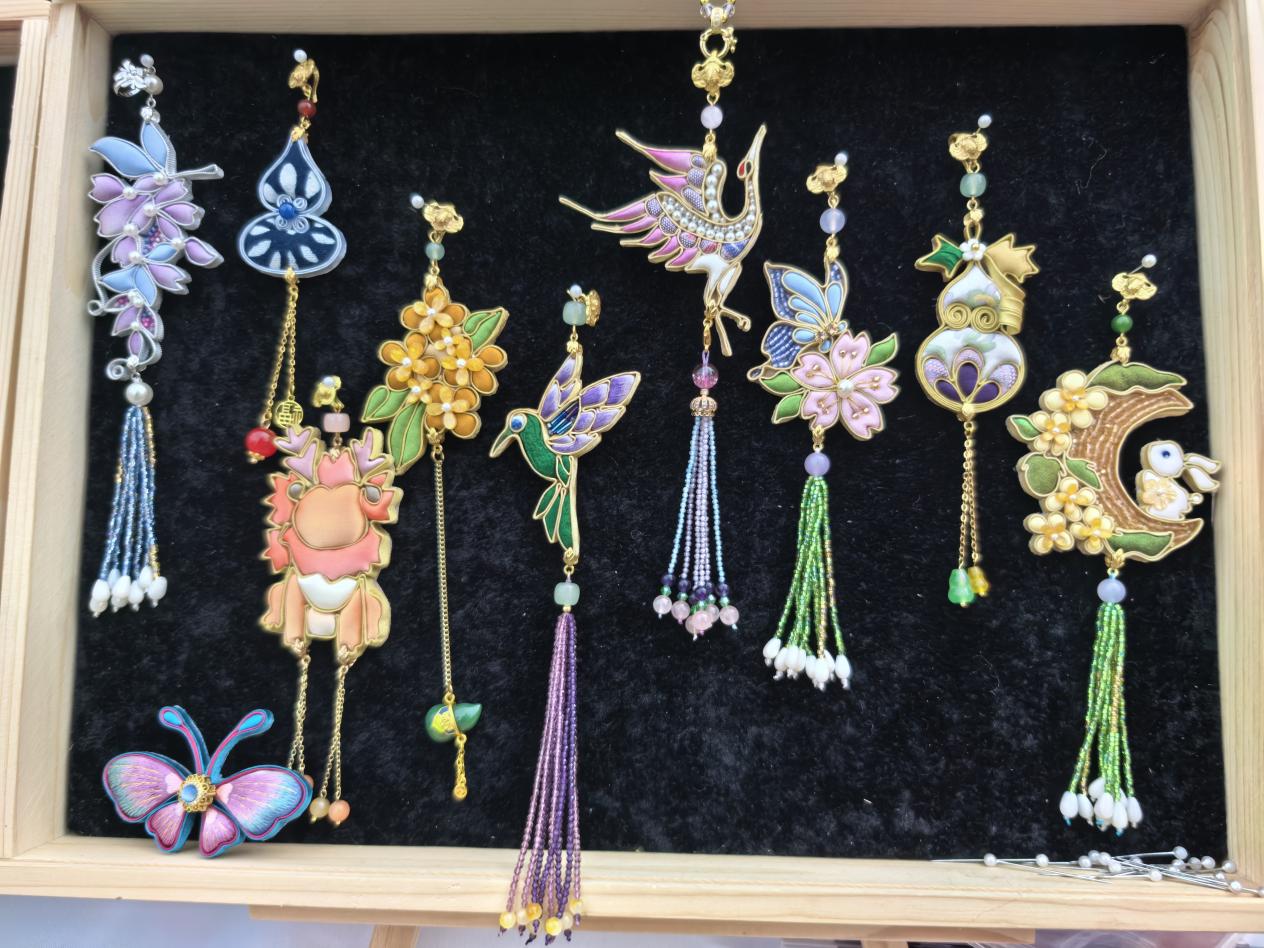
迟冰娜制作的精美盘扣
A selection of pankou made by Chi Bingna
一枚盘扣,凭经纬串起千年历史与当代生活;一双巧手,以坚守诠释技艺传承与创新初心。迟冰娜用自己的行动印证,非遗从来不是过时的古董,而是能够点亮日常、生生不息的文化瑰宝。当越来越多人将盘扣缀于身前、行走世间,这份流转于指间的非遗东方美学,亦如盘扣的丝线般绵延不绝,于时光中代代相传。
A single pankou, through its warp and weft, connects a millennia of history with contemporary life. a pair of skilled hands, with steadfast dedication, embodies the continuity of craftsmanship and the original aspiration for innovation. Chi Bingna’s journey demonstrates that intangible cultural heritage is never a dated relic, but a living cultural treasure capable of illuminating the everyday life. As more people wear and appreciate these intricate pankou, this flowing Eastern aesthetic, passed from hand to hand, will continue like its unbroken silk threads, enduring and being transmitted through time.