从红纸到新篇——剪出幸福人生新花样
From Red Paper to New Chapter — Creating New Patterns for a Happy Life
“咔嚓、咔嚓”,社区剪纸课的教室漾开细碎声响,静谧中唯余徐爱莲沉稳有力的指导声:“这刀从这下……沿这线走……”北京第二外国语学院留学生安格丽娜正兴致勃勃跟着这位退休老人学剪福字。在徐老师指尖流转的示范下,转瞬之间,一幅寿桃图便绽于红纸之上——枝叶层叠,果实圆润,连褶皱里都透着喜气。
Snip, snip—the soft, crisp sound of scissors rippling through the community paper-cutting class, only Xu Ailian’s steady and assured voice could be heard: “Start cutting here… follow this line…” Angelina, an international student from Beijing International Studies University, eagerly follows along, learning to cut the character Fu (meaning good fortune) under the guidance of this retired elder. With a fluid demonstration flowing from Ms. Xu’s fingertips, a longevity peach design blossomed upon the red paper in a moment—layered leaves, plump fruit, and even the creases seemed to brim with festive joy.
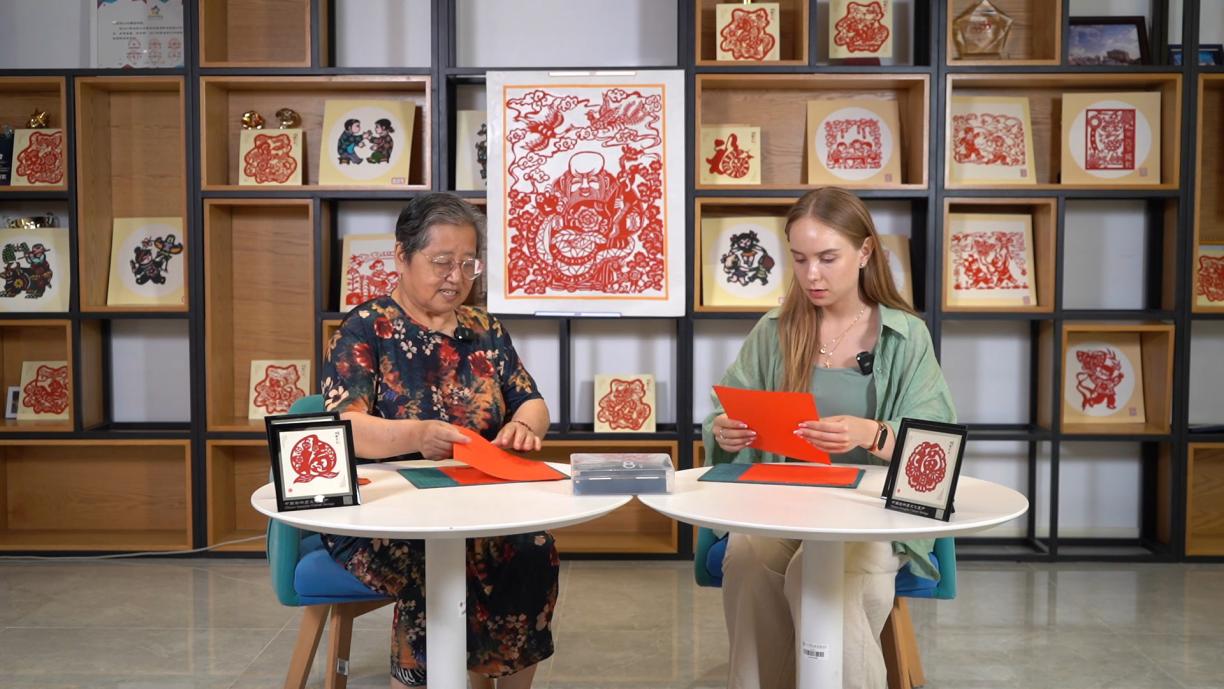
徐爱莲老师指导留学生安格丽娜学习剪纸
Ms. Xu Ailian instructs the international student Angelina in the art of paper-cutting
十年前,徐爱莲还是非遗传承人徐阳的学徒,握刀时指尖常颤;十年过去,她已成社区剪纸队带头人,率四十人队伍“刀走龙蛇”。此刻,满墙红影摇曳,剪刀裁出的不仅是花样,更是一段非遗传承的暖心注脚。
Ten years ago, Xu Ailian was still an apprentice to Mr. Xu Yang, an inheritor of intangible cultural heritage, her fingers often trembling as she held the carving blade. A decade later, she has become the leader of a community’s paper-cutting team, guiding a group of forty members in wielding their tools with fluid mastery. Now, red silhouettes sway across the walls—what the scissors shaping are not just decorative patterns, but also a heartwarming footnote to the living story of the intangible cultural heritage passed down through generations.
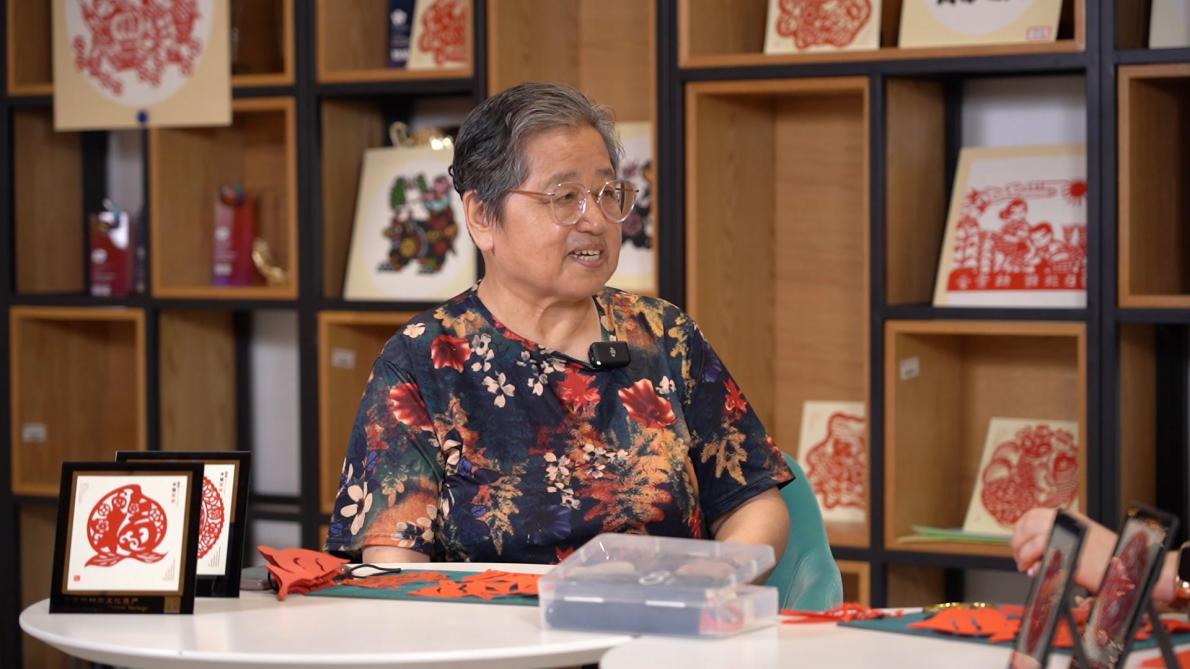
徐爱莲老师讲述中国剪纸历史
Ms. Xu Ailian introduces the history of Chinese paper-cutting
课堂上,徐爱莲讲解中国剪纸历史:其根脉可追溯至南北朝时期的“太阳神鸟”——金箔雕刻的古老纹样,是剪纸艺术雏形。纸张问世后,技艺始入民间,成为百姓表达生活愿景的载体。隋唐大运河开通,剪纸沿运河南传,南北风格自此分野:北方多“阴剪”,以红纸为底掏空余料,线条粗犷大气,带着黄土高原的本色;南方以“阳剪”见长,千丝万缕相连,细腻精巧,苏杭、扬州之作尤典型。明清鼎盛之时,作坊林立,艺人以此为业,婚丧嫁娶、年节喜庆皆离不开吉祥纹样。
In class, Xu Ailian explains the history of Chinese paper-cutting: its roots can be traced back to the “Sun Bird” of the Northern and Southern Dynasties—an ancient gold foil carving that represents the earliest form of the art. After paper was invented, the craft entered everyday life, becoming a medium for people to express their hopes and aspirations. With the opening of the Grand Canal in the Sui and Tang Dynasties, paper-cutting spread south along the waterway, leading to distinct regional styles: the north favors yinjian (negative cutting), hollowing out patterns against a red paper background, with bold, vigorous lines reflecting the essence of the Loess Plateau; the south excels in yangjian (positive cutting), where motifs remain connected by fine and uninterrupted lines, delicate and refined —typical of works from Suzhou, Hangzhou, and Yangzhou. During the golden age of the Ming and Qing Dynasties, workshops flourished, and artists made a living from this craft, and producing auspicious designs for weddings, funerals, festivals, and celebrations.
“真正的剪纸,得有‘魂’。”徐爱莲常言。“三多果”为其入门首作——桃寓寿、榴兆子、佛手兆福。民间剪纸非单纯手艺,每笔每剪皆为祈福,亦是对好日子的向往。这份对“吉祥寓意”的坚守,成了徐爱莲老师后来创作的底色,也让她摸清了非遗背后的文化根脉。
“True paper-cutting must have a ‘soul’,” Ms. Xu often says. The “Three Abundant Fruits” design was her first lesson—peaches symbolizing longevity, pomegranates representing fertility, and bergamots signifying good fortune. Folk paper-cutting is not merely technique; every stroke and every cut is a prayer, a yearning for a better life. This adherence to auspicious symbolism became the foundation of Xu Ailian’s later creations and helped her grasp the cultural roots behind the intangible cultural heritage.
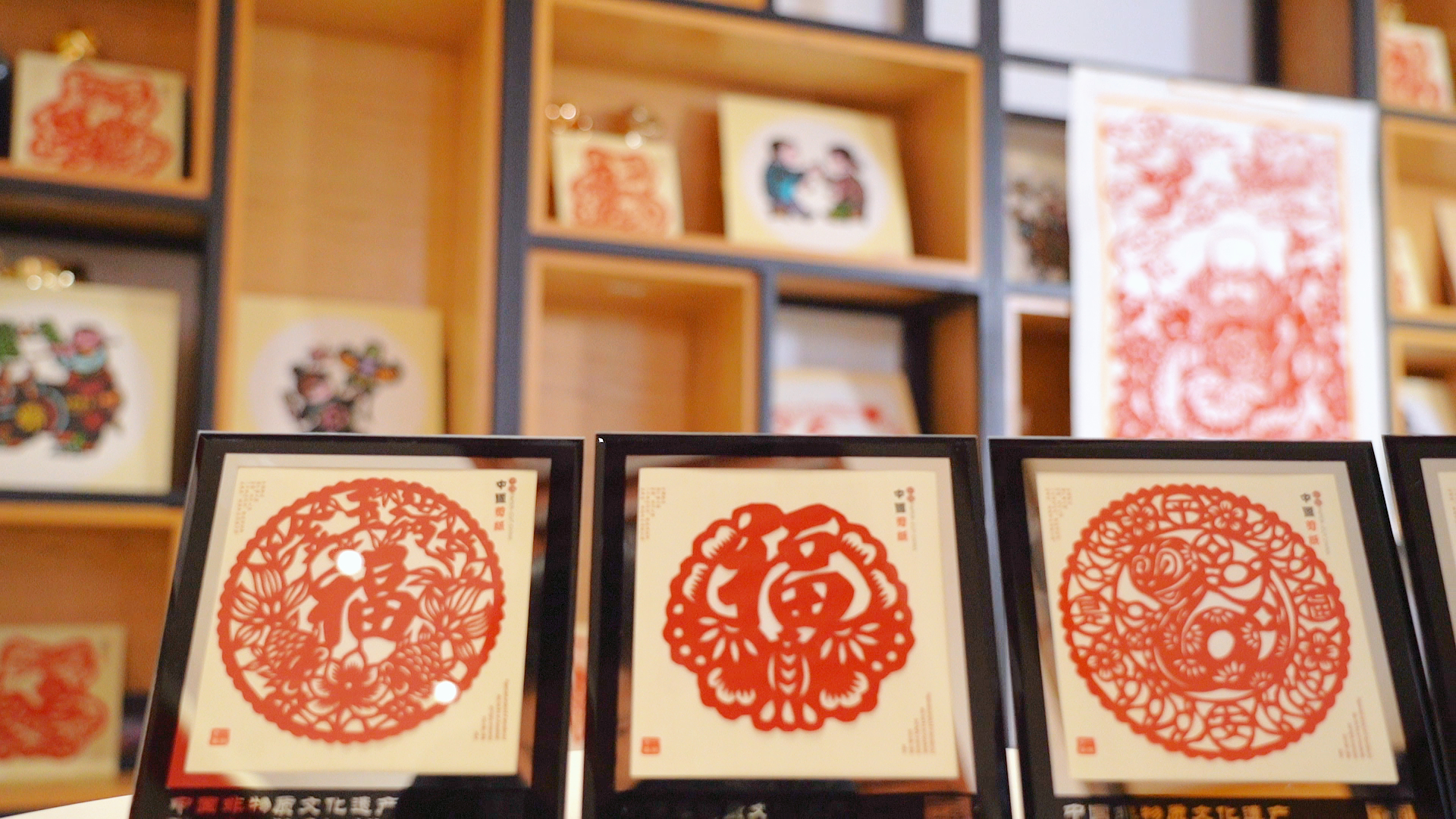
徐爱莲老师剪纸作品
Ms. Xu Ailian’s paper-cutting artworks
2016年,徐爱莲退休生活自此不同。她的老师北京市级非物质文化遗产代表性传承人徐阳先生走进社区,开设老年大学剪纸班。十次课虽短,却点燃一群退休老人的热情。课程结束,她与数位学员自发组织活动,剪纸队由此诞生。如今队伍壮大至四十人,成员多为退休人员,徐阳大师每年仍坚持上课指点迷津,她则成了日常教学核心。“教小朋友剪窗花,教老年人剪生肖,也教残疾人剪简单的吉祥图案。”徐爱莲教学不设门槛。寒暑假社区活动室孩童满座,她手把手教握剪定线;疫情期间亦未辍教,2020年线上授课四十余节。一剪一纸间,心绪的慌乱随之消散——方知此艺亦可抚平焦虑。
In 2016, Xu Ailian’s retirement took on a new turn. Her teacher, Mr. Xu Yang, a municipal-level representative inheritor of intangible cultural heritage in Beijing, entered the community to offer a paper-cutting class at the senior university. Though the ten sessions were brief, they ignited a passion among a group of retirees. After the course ended, she and several classmates spontaneously organized activities, thus the paper-cutting team was born. Today the team has grown to forty members, mostly retirees. Mr. Xu Yang still visits annually to offer guidance, while Ms.Xu herself has become the core of daily instruction. “I teach children to cut window flowers, seniors to cut zodiac animals, and people with disabilities to cut simple auspicious patterns,” she says, setting no barriers to learning. During winter and summer breaks, the community activity room is filled with children as she patiently guides them hand-in-hand in holding scissors and following lines. Even during the pandemic, teaching never stopped—she conducted over forty online classes in 2020. Through cutting paper, anxieties dissolve—she realized this art could also ease tension.
队伍里的故事常令她动容:有学员抗癌期间坚持剪纸,剪刀的节奏成了对抗病痛的支撑;有老人腿摔坏了,坐着轮椅也要来上。“我老师徐阳常说,传承不是一个人的事,是一群人的坚持。” 徐爱莲与各地各流派的剪纸传承人怀有共同心愿:希望通过努力学习,更深地理解这门艺术,并将其传播给更多人。她说:“有生之年,为中国的非遗剪纸作出贡献,在传播非遗剪纸的这条路上继续前行。”
Stories from the team often move her deeply: one member persisted in paper-cutting while undergoing cancer treatment, the rhythm of the scissors becoming a support against illness; an elderly person, having broken a leg, attending lessons in a wheelchair. “My teacher Xu Yang often says that inheritance is not one person’s task, but the persistence of a group.” Xu Ailian notes. Sharing a common aspiration with inheritors of various paper-cutting schools across the country, through diligent study she deepens her understanding of the art and share it with more people. “In my lifetime, I should contribute to China’s intangible cultural heritage of paper-cutting and continue moving forward on this path of spreading it,” she says.
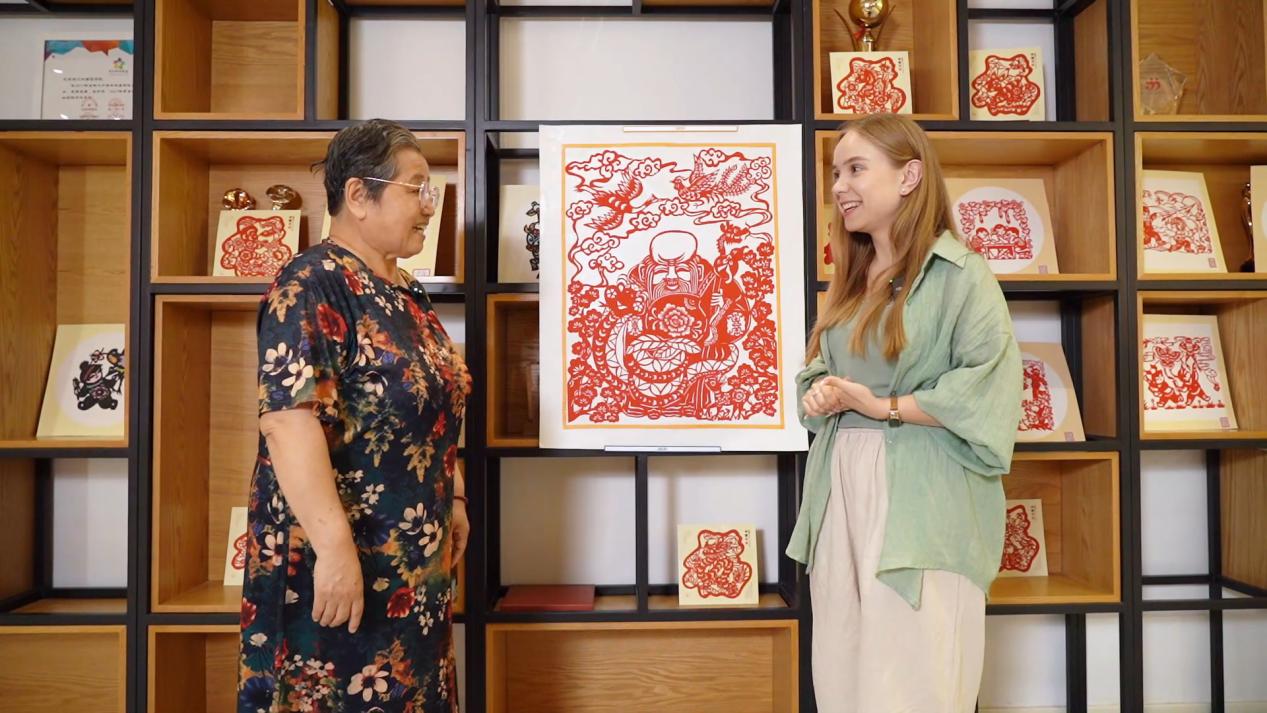
徐爱莲老师展示她的代表作《灵蛇献寿》
Ms. Xu displays her master piece of paper cutting work The Divine Snake Presents Longevity
剪得多了,她不再满足于临摹传统图案,开始将时代主题融入剪纸。2021年建党百年之际,她带领剪纸队策划专题展。 “我们剪了几十幅,每幅都反复修改,比如‘红军过草地’,用阴剪突出人物轮廓,再用阳剪刻出草地细节,让主题更鲜明。” 2025年抗日战争胜利八十周年,她和队员开启“大工程”——创作三幅抗日主题长卷。每幅长卷一米宽、七米长,四十人连续奋战半个月。“我们剪了杨靖宇将军的刚毅,赵一曼的坚定,狼牙山五壮士的壮烈。”
With growing paper-cutting experience, she no longer contented herself with copying traditional patterns, and began integrating the contemporary themes into her work. For the centenary of the Communist Party of China in 2021, she led the team in planning a thematic exhibition. “We created dozens of pieces, revising each repeatedly. For example, in ‘Red Army Crossing the Grassland’, we used negative cutting to highlight figures’ outlines and positive cutting for the details of the grassland, making the theme stand out more clearly.” For the 80th anniversary of the victory of the Chinese People’s War of Resistance Against Japanese Aggression in 2025, she and her teammates embarked on a “grand project”—creating three long scrolls on resistance themes. Each scroll measuring one meter wide and seven meters long, was completed by forty members who had worked intensively for half a month. “We carved the fortitude of General Yang Jingyu, the determination of Zhao Yiman, the heroism of the Five Heroes of Langya Mountain.”
除重大主题创作,传统节日也是剪纸队的“必修课”。春天剪柳芽、桃花,端午剪粽子、艾草,春节剪福字、窗花。现在,徐阳大师的工作室推动剪纸进校园,不少中小学将其纳入美术课,徐爱莲老师也常去附近小学上课。
Beyond major thematic works, traditional festivals are also a “required course” for the team. They cut willow buds and peach blossoms in spring, zongzi and mugwort for the Dragon Boat Festival, and fortune characters and window flowers for the Lunar New Year. Now, Mr. Xu Yang’s studio promotes bringing paper-cutting into schools, and many primary and secondary schools have incorporating it into art classes. Ms. Xu Ailian also regularly teaches at nearby schools.
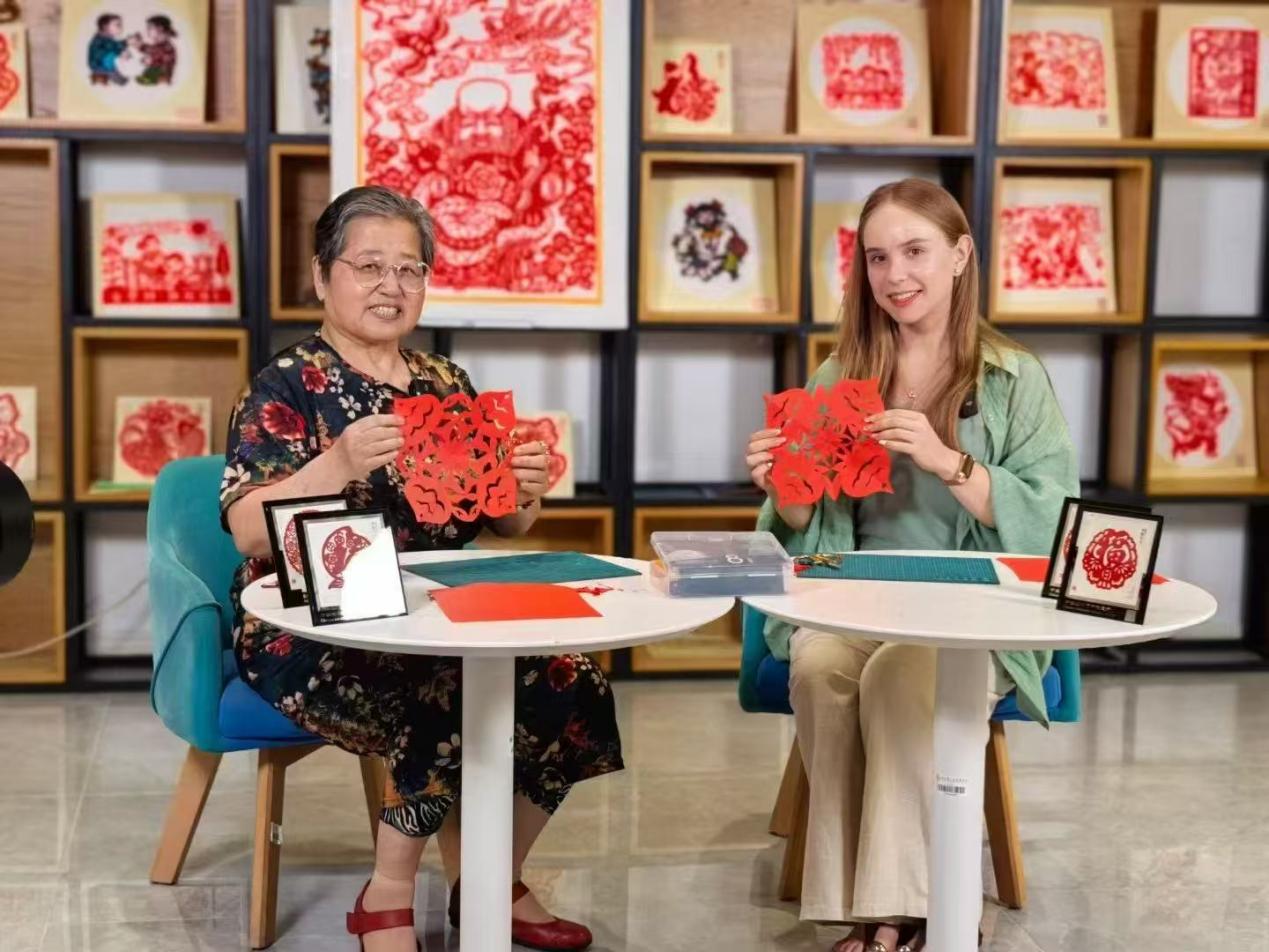
安格丽娜亲身体验非遗剪纸并完成作品
Angelina experiences the intangible cultural heritage and completes a paper-cutting work
非遗传承,难在“活”,贵在“传”。这些年,徐爱莲成了社区“非遗文化代言人”。留学生调研,她导览长卷述史;邻孩好奇,赠己剪小窗花;社区党建活动亦邀队现场创作。“剪纸是吉祥的艺术,传播正能量,让人心里敞亮。” 每次剪完作品,看着鲜艳的图案,她都这样觉得。
Inheriting intangible cultural heritage is difficult in keeping it “alive” and precious in passing it “on”. Over the years, Xu Ailian has become the community’s “ambassador” for intangible cultural heritage. When international students conduct research, she guides them through long scrolls and recounts history; when neighborhood children show curiosity, she gives them small window flowers she cut herself; the team is also invited to create on-site at community Party-building events. “Paper-cutting is an art of auspiciousness, spreading positive energy and brightening people’s hearts,” she feels each time she finishes a piece, gazing at the vibrant patterns.
如今,她的业余生活几乎被剪纸填满:每月组织活动,定期授课,筹备新主题的创作。有人问累不累,她总说:“老有所学,老有所为,老有所乐,这就是最好的状态。”
Now her spare time is almost entirely filled with paper-cutting: organizing monthly activities, teaching regular classes, preparing new thematic creations. When asked if she feels tired, she always says: “To keep learning in old age, to keep contributing, and to find joy—that is the best state to be in.”