六代传承——三尺高跷踩出百年风华
Six Generations of Legacy: A Century of Glory Striding on Metre-High Stilts
清晨五点,天光未亮,高碑店这片土地上已经响起了沉稳的脚步声。“来,我教你怎么踢腿。”一位老师正带着一群孩子练习高跷,他时而弯腰帮孩子调整绑腿,时而亲自示范动作。
At five in the morning, before dawn had broken, the steady rhythm of footsteps already echoed across Gaobeidian Village. “Come on. Let me show you how to kick.” A teacher was instructing a group of children practicing stilts-walking. Moving among them, he bent down to adjust their leg bindings, then straightened to demonstrate the movements himself.
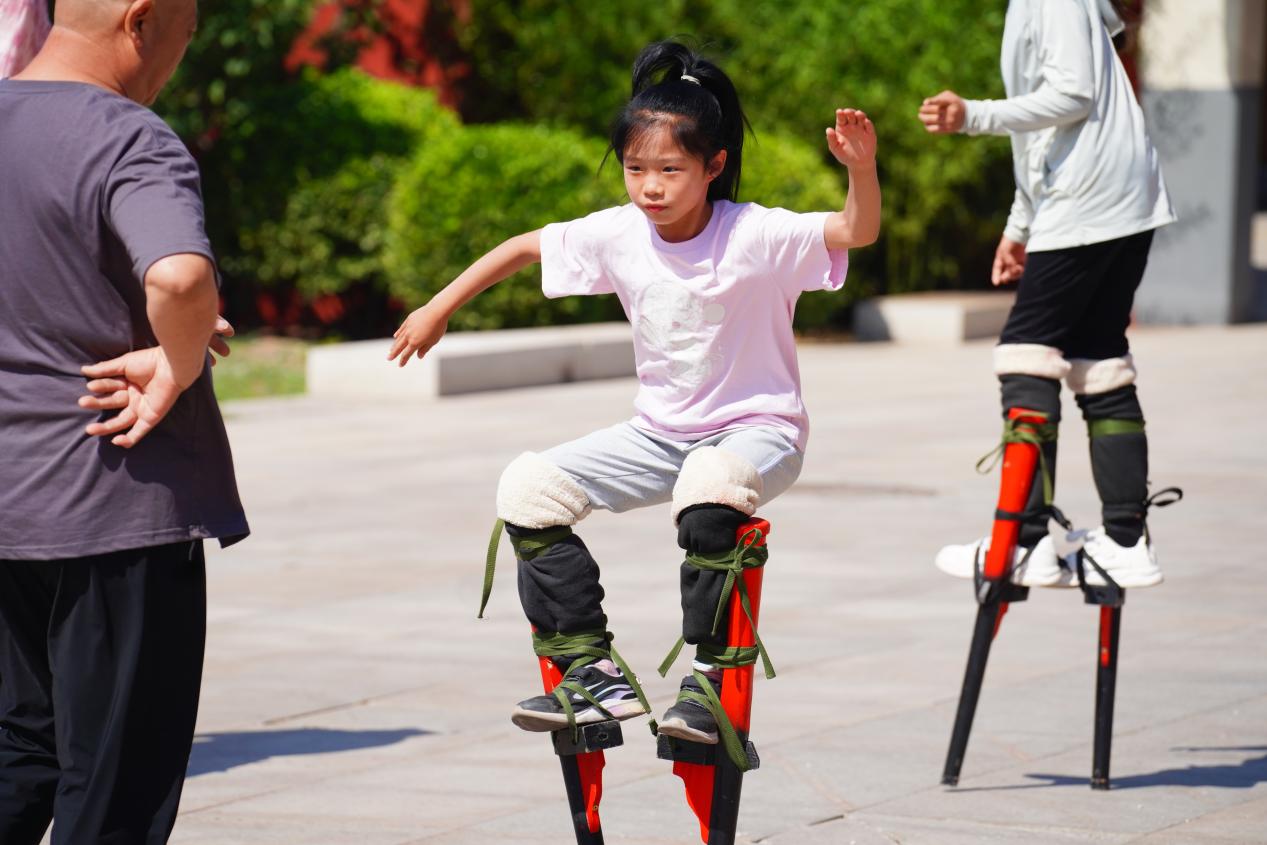
少儿高跷队成员展示高跷绝活
Members of the children’s stilt team demonstrate their amazing stilt skills
近日,北京第二外国语学院的塞尔维亚籍教师优万娜也来到北京高碑店体验这项非遗文化——高碑店高跷,这项起源于清光绪十二年(1886年)的民间艺术,至今已传承六代,而在这项技艺的发展历史中,有这样一位传承人——张爱革,现担任高碑店高跷会会长。他从父亲手中接过高跷,用自己的一生撑起了高跷这项非物质文化遗产的过去、现在和未来。
Recently, Jovana, a Serbian teacher from Beijing International Studies University, visited Gaobeidian Village to experience this Intangible Cultural Heritage—Gaobeidian Stilts-walking. This folk art, which originated in 1886 during the Qing Dynasty, has now been passed down through six generations. And in its long history, an inheritor stands out: Mr. Zhang Aige, current president of the Gaobeidian Stilt Walking Association. Taking up the stilts from his father, he has devoted his life to preserving this Intangible Cultural Heritage—carrying forward its past, sustaining its present, and safeguarding its future.
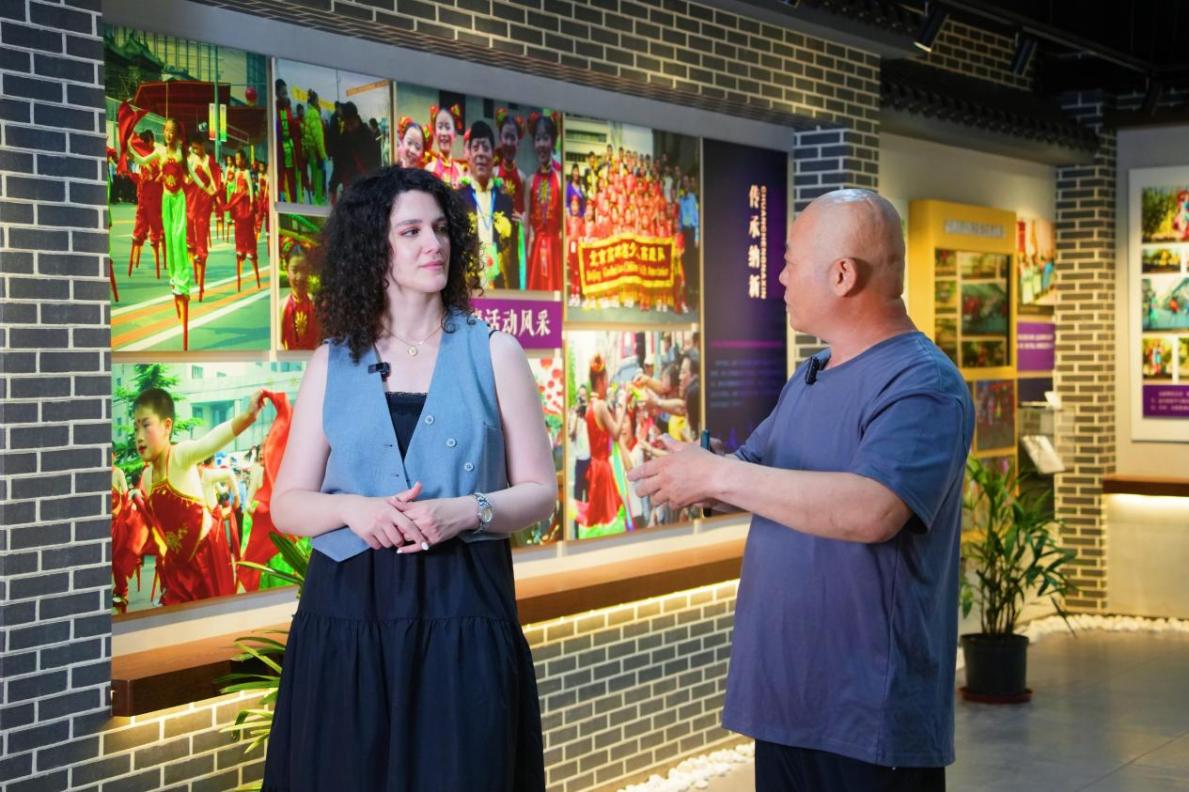
张爱革老师为塞尔维亚教师优万娜介绍高跷起源
Mr. Zhang Aige introduces the origin of stilts-walking to Serbian teacher Jovana
他和高跷的故事要从六岁那年开始讲。那年高跷会重整,在外出买鼓途中,父亲手把手教他打鼓的节奏。回来后,他目不转睛地看着大人们排练,眼中满是憧憬。在父亲的鼓励下,他颤颤巍巍地“登跷”,一年后,七岁的他便正式“出会”,在表演队伍中扮演“小头行”。从“小头行”到“大头行”,再到后来成为掌控全场节奏的“武扇”,这条路上没有捷径,只有一步一个脚印。“当武扇的人,得会所有高难度动作,练的活儿要比别人多得多。”他深知,作为核心人物意味着更多的付出与更重的责任。
His story with stilts began at the age of six. As the Gaobeidian Stilts-walking Association was reorganized that year, his father taught him drum rhythms hand-in-hand on a trip to buy new drums. Back home, the boy was completely mesmerized by the adults’ rehearsals, his eyes full of longing. Encouraged by his father, he tremblingly stood on the stilts for the first time. A year later, at just seven, he made his formal debut at a temple fair, performing as “Xiaotouhang” the role of the front guide. From there he rose to “Datouhang” the role of the chief guide and eventually to “Wushan” the role of a warrior with a fan who sets the rhythm for the entire troupe. This path offered no shortcuts, only step‑by‑step progress. “To perform as the Wushan, you must master every difficult movement. The training required is much harder than for any other role,” he said. He fully grasped that being the central figure meant greater dedication and heavier responsibility.
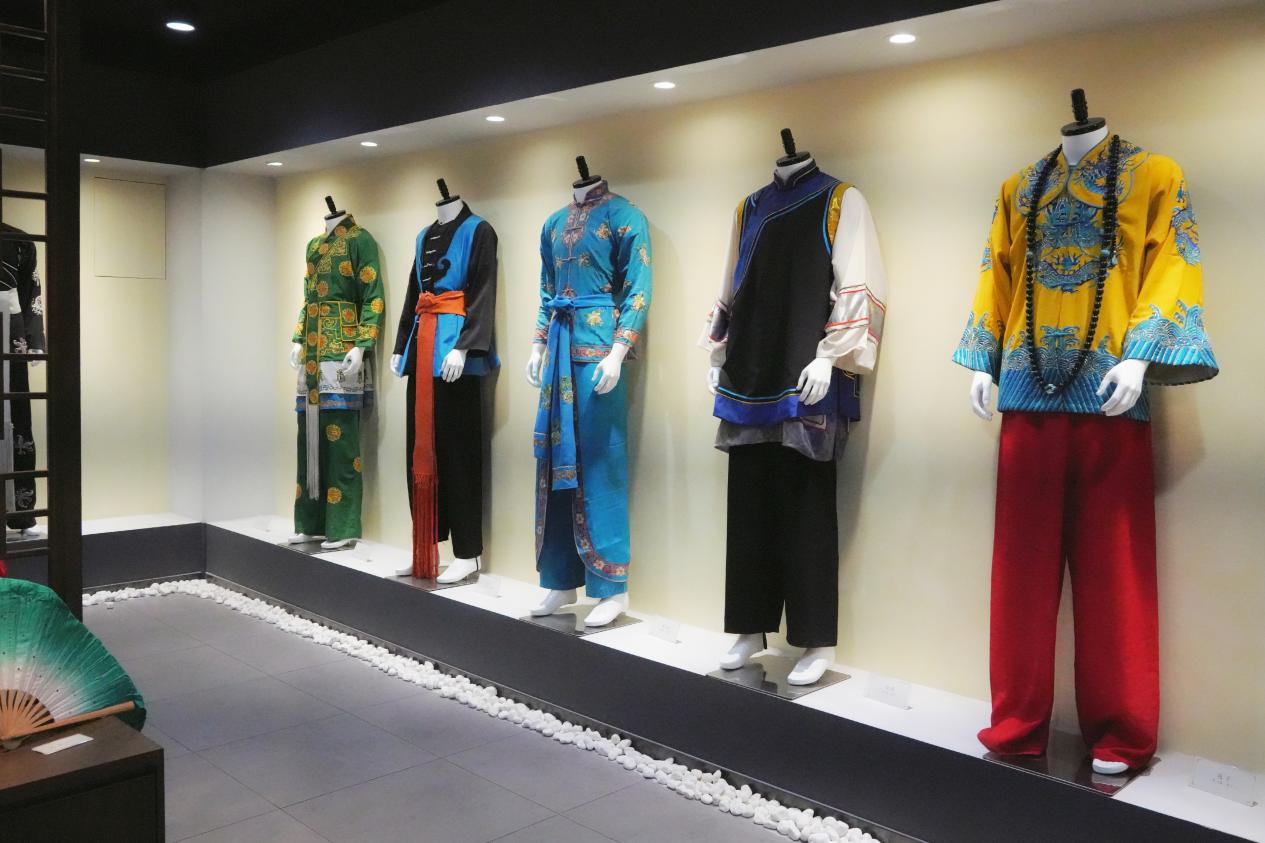
高碑店高跷博物馆陈列的精美表演服饰
Exquisite performance costumes display at the Gaobeidian Stilts-walking Museum
这份技艺的传承,可追溯至近两个世纪前。他的祖上是高碑店高跷老会的创始人之一。当年,大家看见周边村子逢年过节都有热闹的走会活动,便合计着“咱们村也应该弄点什么”。再加上有村中经商者的慷慨赞助,“高碑店高跷老会”就此成立。早年的高跷老会,是村民口中的“子弟玩意”——没人图钱,全凭热爱。鼎盛时期,老会成员多达七八十人,行当齐全,队伍庞大。
The craft can be traced back nearly two centuries. His ancestors were among the founders of the original Gaobeidian Stilts-walking Association. Back then, after seeing the lively temple fairs in neighboring villages during festivals, the locals thought, “Our village should have something of its own as well.” With the generous sponsorship of village merchants, the Gaobeidian Stilts-walking Association was thus established. In its early years, it was a “pastime for the youth”—no one was in it for money; it was all driven by passion. At its peak, the association had as many as seventy to eighty members, with a full range of roles and a sizable performing troupe.
“凭能耐上,没能耐您就演B角、C角,甚至给后边提溜东西去。”张爱革回忆起儿时走会的情景,眼神里满是怀念。
“Whether you could perform depended entirely on your own ability—if you weren’t good enough, you would take the B-role, the C-role, or even just carry stuff in the back,” recalled Mr. Zhang Aige, his eyes filled with nostalgia as he remembered the parade scenes from his childhood.
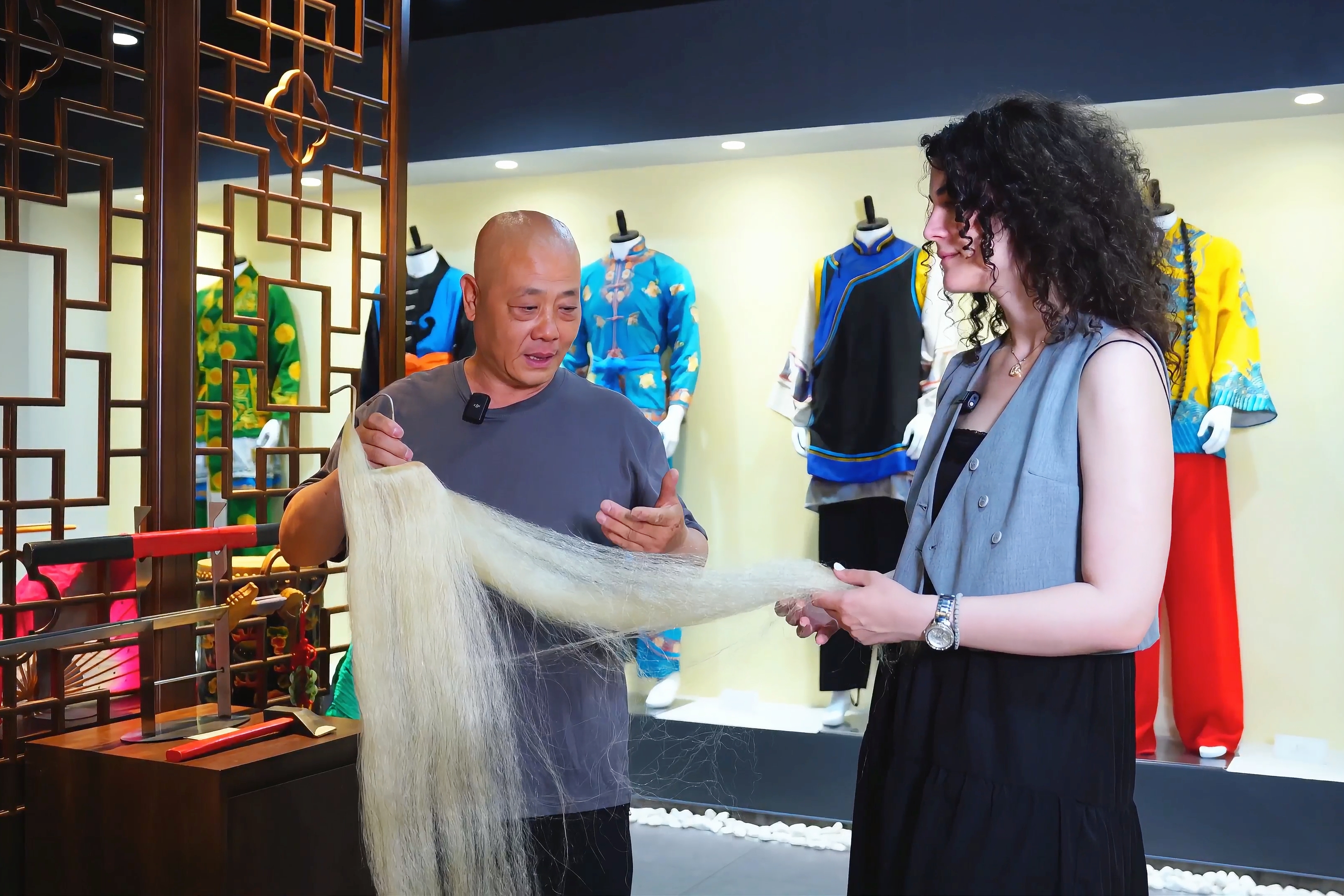
张爱革老师介绍高跷表演道具
Mr. Zhang Aige introduces stilts-walking performance props
高碑店高跷真正声名远播,还要归功于其独特的表演环境——娘娘庙的13层石阶。当其他地方的队伍还在平地上演练时,高碑店的艺人们却要在陡峭的台阶上完成“背剑”等令人叹为观止的绝活。“你不能看台阶,看就摔了。”张爱革说这话时,神情格外认真。他至今还记得最难忘的一次表演是在龙潭湖的比赛。为了还原高碑店高跷台阶表演的精髓,用木头搭起13层台阶,又在上方叠放桌子和椅子,总高度超过3米。他先要完成一系列高难度动作,再从椅背上翻身跳落。那时还是土地,跳下来后高跷能扎进土中深达五六十公分。回想起这一幕,他笑了笑,眼神中流露出难以掩饰的骄傲。然而,时代的变迁给这门古老的艺术带来了严峻的挑战。
Gaobeidian Stilts-walking truly rose to fame because of its unique performance venue—the 13 stone steps of the Goddess Temple. While other troupes practiced on level ground, Gaobeidian artists performed breathtaking stunts like the “Back Sword” on these steep steps—flipping the stilts upright behind their back and holding them steady while jumping and turning. “You couldn’t look at the steps; —if you did, you would fall,” Mr. Zhang Aige stated with a grave expression. He still remembered his most unforgettable performance at a competition in Longtan Lake. To recreate the essence of Gaobeidian’s iconic steps, a 13-tier wooden structure was built, topped with tables and chairs, reaching over three meters high. After completing a series of demanding movements, he flipped and leaped from the back of the chair back. The ground below was bare earth, and upon landing, his stilts plunged fifty to sixty centimeters deep into the ground. Remembering this, he smiled, yet his eyes revealed a pride that could not be hidden. Nevertheless, the shift of the times has posed severe challenges to this ancient art.
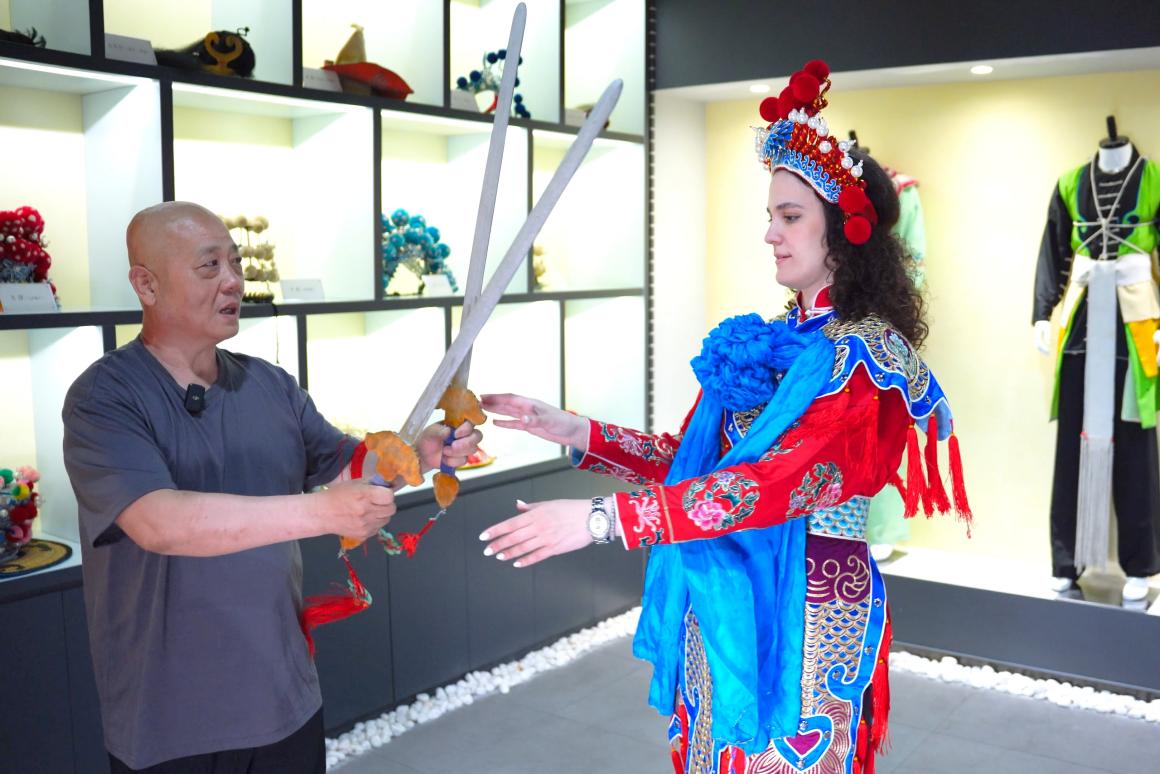
非遗传承人张爱革带领优万娜体验非遗高跷
Jovana experiences the intangible cultural heritage of stilts-walking
他深情地回忆起早年走会的盛况。“那时候娱乐项目少,走会前半个月就得贴海报。出会当天,房上、树上、墙头上全是人,家家锁门来看,街上挤得连地面都看不见。”即便化妆用的油彩过期到“熏眼睛、流眼泪”,大家心里依旧“美得跟什么似的”。行头也是“大红大绿的棉布做的,缝缝补补还能穿”。可就算条件如此,大家的热情丝毫未减:有钱的出钱买材料,没钱的出力搭台子,实在不行就来捧个人场。那股凝聚力,正是民间艺术最蓬勃的生命力。
He fondly recalled the vibrant parades of earlier times. “In those days, there wasn’t much entertainment. Large posters would go up half a month ahead of the event. On the day of the performance, would climb onto roofs, perch in trees, and crowd onto every wall—households would lock their doors and come out to watch. The streets were so packed that you couldn’t even see the ground.” Despite using expired greasepaint, which caused the performers’ eyes to tear up from irritation, everyone felt immensely proud. Their costumes, sewn from bright red and green cotton cloth, were mended and worn again and again. Yet, enthusiasm never faded: those with money contributed materials; those without offered their labor; and everyone else came to be part of the crowd. That sense of community was the very lifeblood of folk art—its most vibrant, enduring pulse.
让张爱革倍感自豪的是,2005年他担任总教练组建的少年高跷队应邀走出国门,远赴英国伦敦演出。这是中国农民高跷首次登上国际舞台,孩子们精彩的表演赢得了现场观众雷鸣般的掌声。随后,这支队伍又先后应邀到悉尼、洛杉矶、温哥华等地表演。每到一处,他们都用精湛的技艺向世界展现灿烂的中华民间艺术,令外国友人惊叹不已。
A profound source of pride for Mr. Zhang Aige was in 2005, when, as head coach, he led a youth stilts-walking troupe he had trained on an invited performance to London, UK. This marked the debut of Chinese rural stilts-walking on an international stage, where the children’s dazzling performance earned thunderous applause from the audience. Subsequently, the troupe was invited to perform in Sydney, Los Angeles, Vancouver, and beyond. In every city, they mesmerized international audiences with their exquisite artistry, offering the world a vibrant display of Chinese folk art.
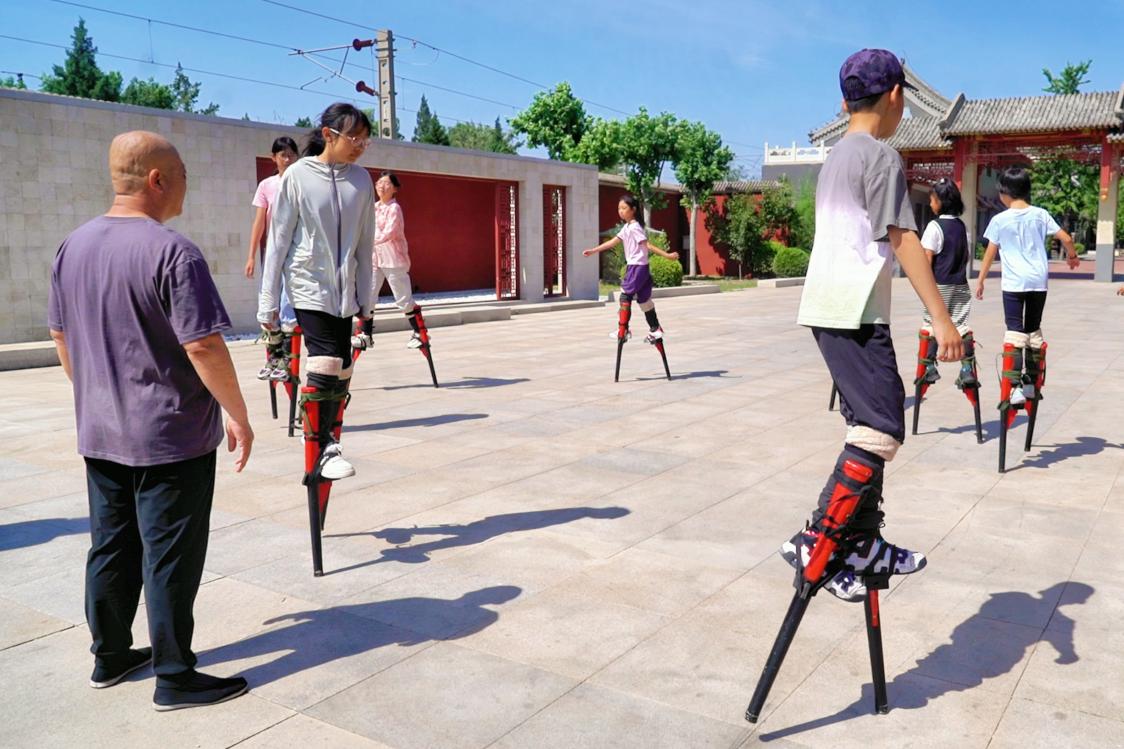
高碑店高跷非遗传承人张爱革老师训练少儿高跷队
Mr. Zhang Aige trains the children’s stilts-walking team
“现在最大的困难,就是后继乏人。”他痛心地说。许多极有灵性的孩子,一旦升学便因学业压力而放弃。“练得相当好的,走了好多,让你特别心疼。”面对这些困境,他选择坚守。一方面,他坚持“血脉”与“地脉”相传,从自家“侄男嫂女”和本村孩子中培养苗子,他三岁的小外孙已能登跷表演。另一方面,他努力推动高跷走向更广阔的舞台,带领少儿高跷队参与重要外事接待活动,让这门古老艺术焕发新的光彩。
“The greatest challenge we face now is lack of successors,” he lamented. Many naturally gifted children give up practicing as soon as they advance to higher grade, overwhelmed by academic pressure.” So many who trained exceptionally well have left; it’s truly heartbreaking.” Yet facing these struggles, he stands firm. On one hand, he insists on passing down the art through “family lineage” and “local roots”, nurturing young talents from his nieces, nephews, and village children—his own three-year-old grandson is already able to perform on stilts. On the other hand, he strives to bring stilts-walking to broader stages, leading the children’s troupe in important diplomatic receptions and breathing new vitality into this ancient art.
问及心愿,他的回答朴实而深远:“我就是希望有更多的孩子能参加到高跷的练习中来,把老祖宗留下来的这点文化传承下去。”从六岁孩童到如今的会长,他的生命轨迹与高碑店高跷的百年历史紧密交织。在那一起一伏的跷步中,他跨越的是家族的记忆、村庄的历史,更是一个民族民间文化的坚韧与辉煌。他的故事告诉我们,非遗传承传的不仅是“技”,更是“魂”。每当鼓声响起,他依然会带着孩子们踏上高跷,让古老的技艺在新一代的脚下,继续向前走下去。
When asked about his hopes, his answer was simple yet profound: “All I wish is for more children to take up stilts-walking and help pass on this cultural heritage that our ancestors left us.” From a six-year-old child to the president of the association today, the arc of his life is deeply intertwined with the century-long history of Gaobeidian Stilts-walking. In the rise and fall of each step with stilts, he has walked though the memory of his family, the history of his village, and the enduring spirit of a people’s folk culture. His story reminds us that inheriting intangible cultural heritage involves passing on not merely a skill, but more importantly, a soul. And so, whenever the drum begins to sound, he still takes to the stilts with the children, ensuring the ancient art lives on through a new generation.