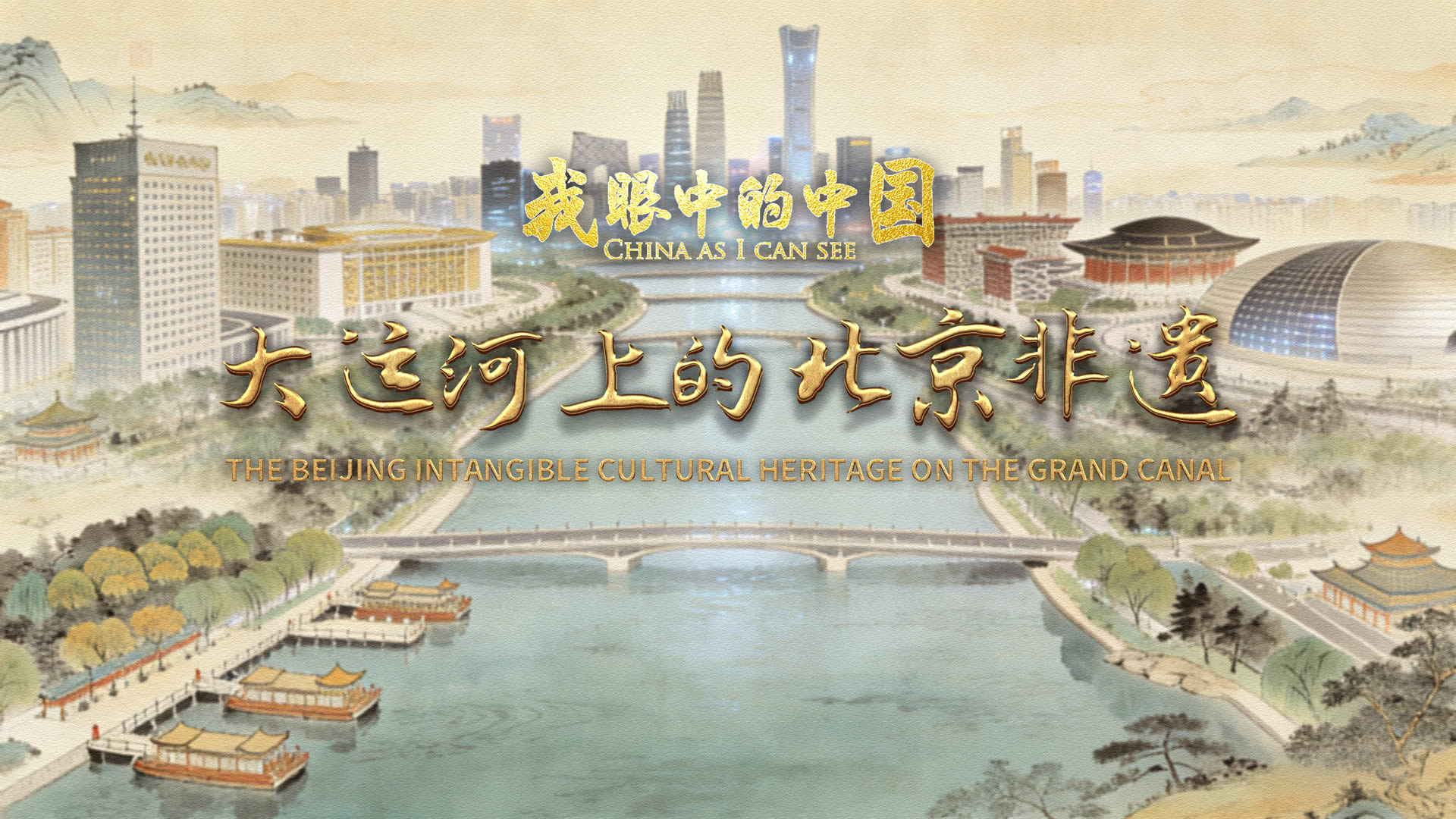
超越胜负:中国式摔跤如何教会世界“分寸”
More Than a Takedown: Etiquette Meets Strength in a 300-Year-Old Chinese-style Wrestling
“摔跤摔的是技巧,更是做人的分寸——这善扑营的‘礼’与‘巧’不能丢!”武馆内,王同庆正了正腰间的练功带,话音未落便抬手示范抱拳礼的标准姿态:拇指内扣、掌指并拢,腕肘绷成一条直线,每个细节都浸着百年传承的章法。
“Wrestling is not only about technique; it is about sense of propriety in one’s conduct. The ‘li’ (etiquette) and ‘qiao’ (skill) of the Shanpu Battalion must never be lost!” In the Martial Arts Hall, Wang Tongqing straightened the training belt around his waist. Before his words faded, he raised his hands to demonstrate the standard posture of the Baoquanli (fist-and-palm salute): thumb tucked inward, fingers closed together, and wrists and elbows forming a straight line—every detail steeped in a century-old tradition.
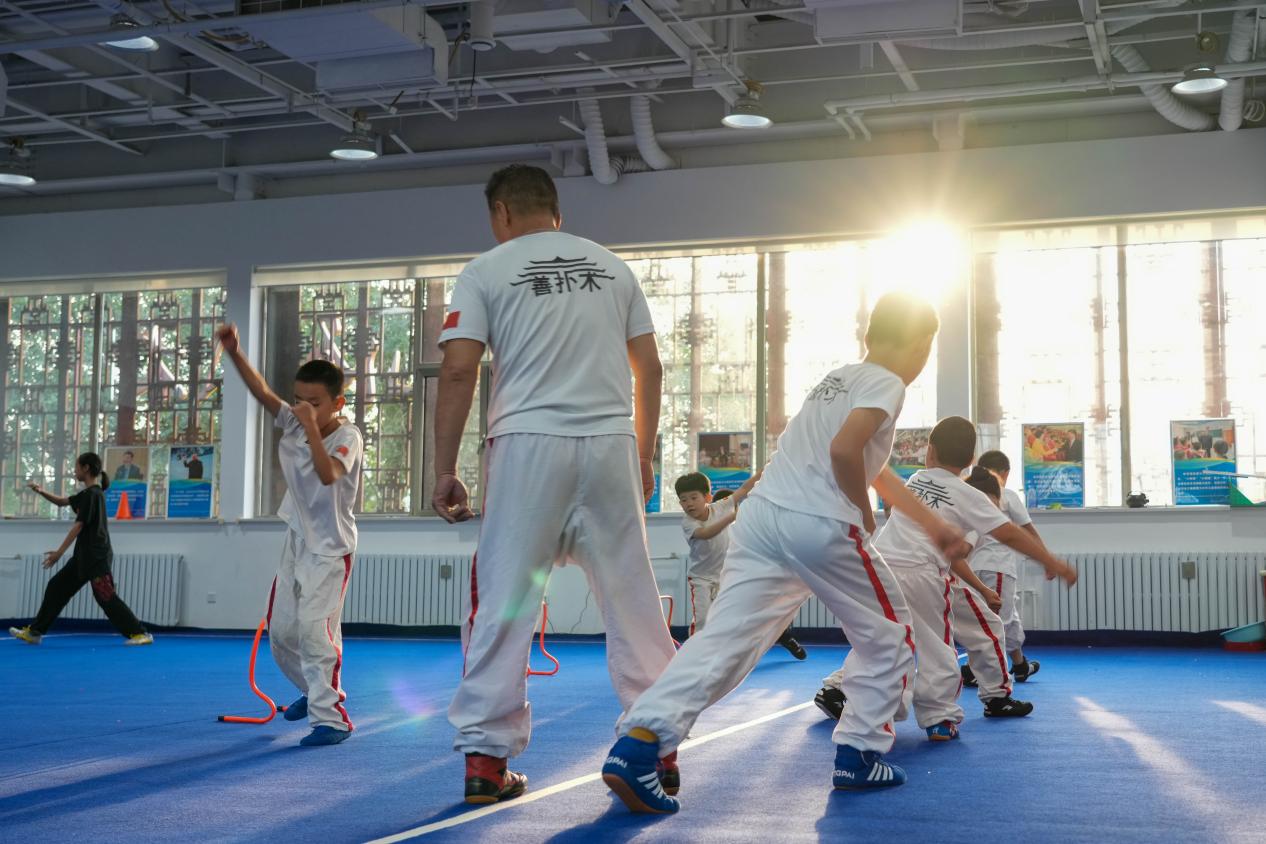
优万娜同小朋友们一起学习善扑术基础动作
Jovana practices the basic moves of Shanpu with a group of children
在北京市西城区冰窖口胡同,一座檐角轻扬的传统建筑静静矗立,门楣悬着武术牌匾,古朴端庄——这里便是清代宫廷善扑技艺的当代传习之所。执掌此处的,正是国家一级裁判、中国式摔跤教练员王同庆。
In Bingjiaokou Hutong, Xicheng District of Beijing, stands a traditional building with elegantly curved eaves quietly, its lintel adorned with a Martial Art plaque, simple yet dignified. This is the contemporary training ground for the Shanpu skills of the Qing Dynasty, hosted by Wang Tongqing, a national first-class referee and Chinese-style Wrestling coach.
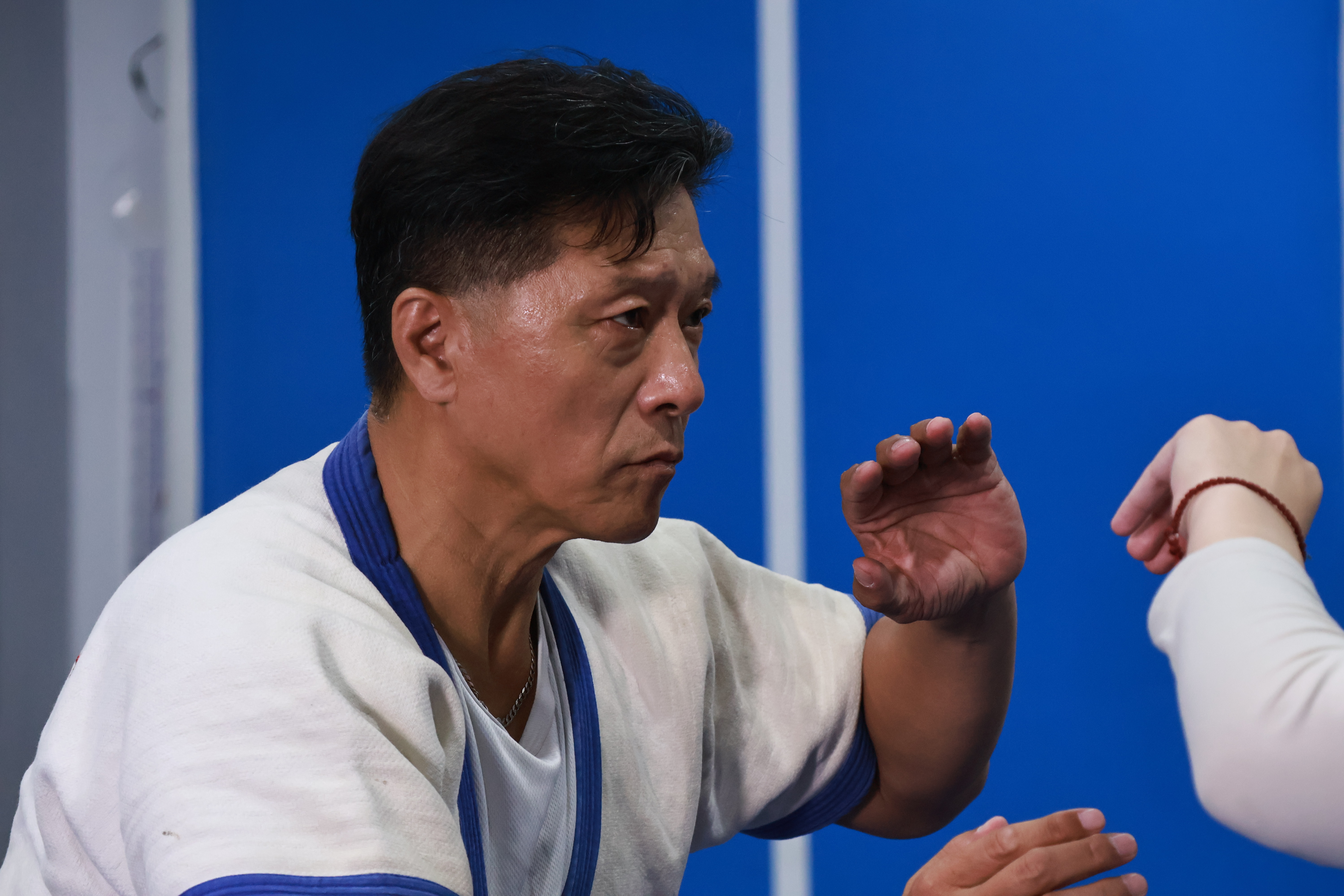
国家一级裁判、中国式摔跤教练员王同庆
Wang Tongqing, national first-class referee and Chinese-style Wrestling coach
善扑营的历史,溯至三百余年前的清康熙八年(1669年)。作为清廷特设的技勇机构,它以“布库”(满语摔跤)为核心技艺,既供宫廷演武助兴,更承载着骑射尚武的民族文化精神。晚清以降,这项技艺走出宫廷、融入民间,在老北京跤场、庙会中生根抽芽,化作市井文化里最具代表性的“力与美”象征。
The history of the Shanpu Battalion dates back over 300 years to the eighth year of Emperor Kangxi’s reign in the Qing Dynasty (1669). As a specialized royal martial institution established by the Qing court, it centered on Buku (Manchu wrestling), serving both as entertainment for the imperial court and as a symbol of the ethnic cultural spirit that valued martial prowess and horsemanship. From the late Qing Dynasty onward, this royal art moved beyond the palace and integrated into folk culture, taking root in old Beijing wrestling grounds and temple fairs, becoming as a quintessential symbol of “strength and beauty” in urban folk culture.
王同庆与善扑术的缘分,根植于骨子里的武术热忱。自幼腰腿灵便的他,八十年代初进入北京市宣武区体校,拜入六十年代全运会中国式摔跤最轻量级冠军王英华门下,正式研习中国跤术。在恩师的精心培育与严格督导下,他的跤技飞速精进,因作风剽悍、技法全面,跻身同期跤手佼佼者之列,获“巴凌”艺名。他不仅成绩骄人,更承继了师父的品格:忠实厚道、恭谦礼让,在跤坛口碑极佳。为探武术精髓,九十年代初,经王英华首肯,他拜摔跤名家王文永为义父,夯实跤术根基;后又拜北京樊派八卦掌名家文大生为师,系统修习八卦掌,将其中精妙的步法、身法融于跤术,令其技艺刚柔并济的韵味更显。
Wang Tongqing’s connection to Shanpu is rooted in his innate passion for martial arts. Gifted with agility from a young age, he enrolled in the Beijing Xuanwu District Sports School in the early 1980s and apprenticed under Master Wang Yinghua, the lightest-weight champion of Chinese-style Wrestling at the National Games in 1960s. Under his master’s meticulous guidance and strict supervision, Wang Tongqing’s wrestling skills advanced rapidly. Known for his fierce style and comprehensive techniques, he stood out among his peers and earned the stage name “Baling”. Beyond his achievements, he also inherited his master’s virtues—loyalty, honesty, humility, and courtesy—which earned him an excellent reputation in the wrestling community. In the early 1990s, seeking to delve deeper into the essence of martial arts, with Mr. Wang Yinghua’s approval, Wang Tongqing later became the disciple of wrestling master Wang Wenyong to solidify his wrestling foundation. Later, he apprenticed under Mr. Wen Dasheng, a master of the Beijing Fan School of Baguazhang, systematically integrating Baguazhang’s footwork and body techniques into his wrestling, enhancing its blend of strength and grace.
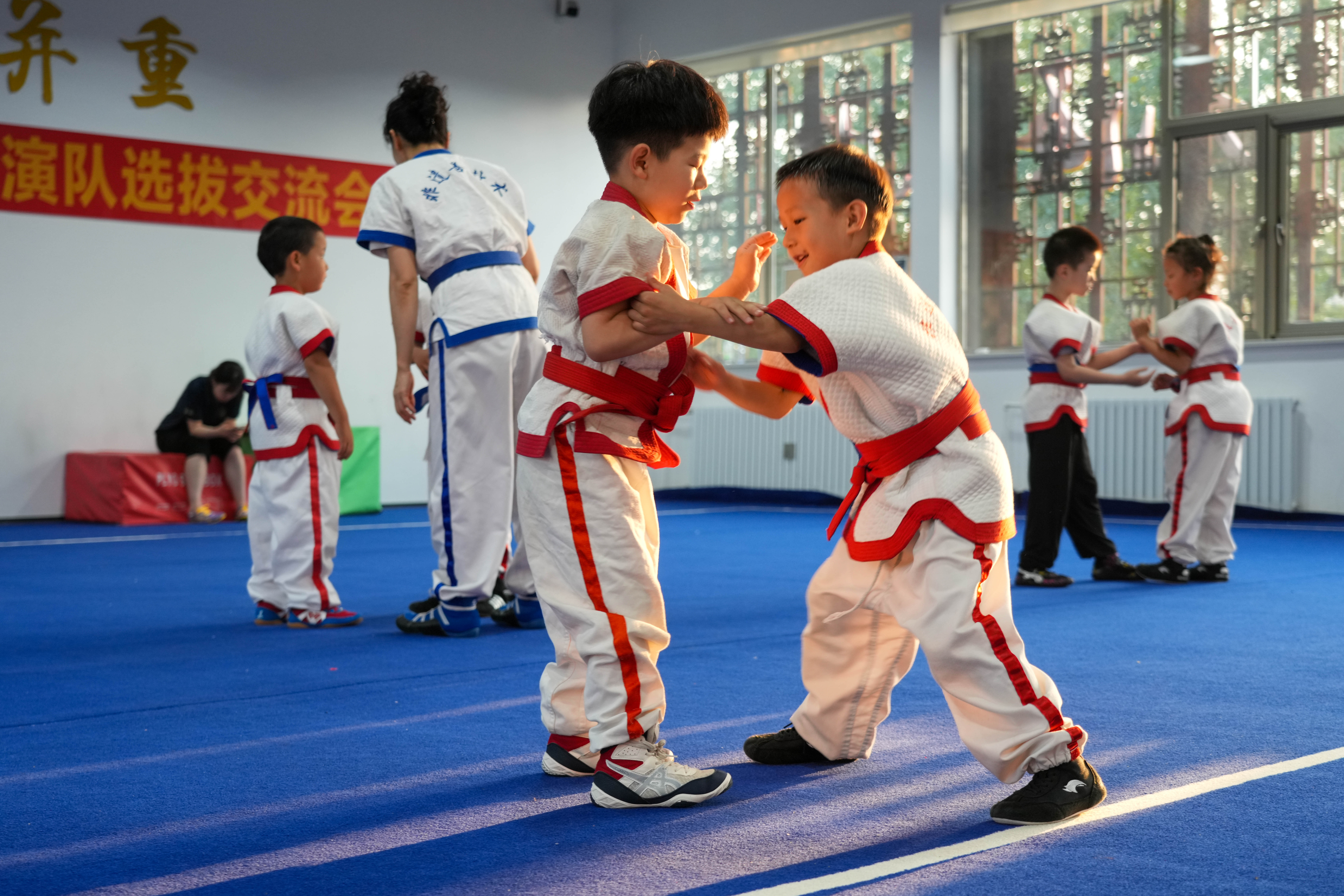
小学员们专心进行善扑训练。
The young students focus on practicing Shanpu.
一块地毯即擂台,一方跤场承续善扑营精神。十年前,王同庆与好友胡万年一拍即合,决心打破地坛原有跤场的地域局限,让善扑术在更广阔的舞台上绽放光彩。在海外推广之路上,王同庆的步伐果敢且坚定。他远赴马来西亚,不仅牵头举办善扑术相关赛事,还联合当地武术机构,落地了东南亚地区中国式摔跤基础班课程,在当地武术圈掀起一阵中国跤热潮。
A wrestling mat serves as the arena, a training ground continuing the spirit of the Shanpu Battalion. Ten years ago, Wang Tongqing and his close friend Hu Wannian joined forces, determined to break the geographical limitations of the Ditan Wrestling Ground,their original training ground and let Shanpu shine brightly on a broader stage. On the path of overseas promotion of Shanpu, Mr. Wang has taken bold and steadfast steps. He traveled far to Malaysia, not only organizing Shanpu competitions but also collaborating with local martial arts organizations to establish basic Chinese-style Wrestling courses in Southeast Asia, sparking a wave of enthusiasm for Chinese-style Wrestling in the local martial arts community.
如今的王同庆,肩上的担子更重,却也步履更坚。他多次奔赴比利时参与文化交流活动。在当地的武术场馆里,王同庆抛开语言隔阂,手把手向外国爱好者传授“勾腿”“别子”等经典跤术技巧。从动作的发力角度到身形的转换窍门,他都耐心讲解、反复示范,不少外国学员在他的指导下入门,最终选择拜师学艺。一张拜师帖,不仅是师徒情谊的见证,更是善扑术扎根异国土壤的开端。
Today, Mr. Wang Tongqing shoulders greater responsibilities but walks with even firmer steps. He has traveled to Belgium multiple times for cultural exchange activities. In local martial arts venues, Mr. Wang overcame language barriers, personally teaching foreign enthusiasts classic wrestling techniques like “hook leg” and “tripping throws”. From the angles of force application to the tips of body positioning, he patiently explained and repeatedly demonstrated, guiding many foreign learners to begin their journey, with some eventually choosing to become his disciples. A formal apprenticeship is not only a witness to the master-disciple bond but also the beginning of Shanpu taking root in foreign soil.
从北京地坛的一方跤场,到东南亚的武术课堂,再到世界的文化交流舞台,王同庆带着善扑术一步步走出国门,为传统技艺的海外传播搭桥铺路。他让这项源自清代宫廷善扑营的古老技艺,在异国他乡焕发新的生机,也让蕴藏其中的中华武术文化与处世智慧,被更多人看见、理解与接纳。
From the wrestling ground of Ditan Park in Beijing to martial arts classrooms in Southeast Asia, and onto the global stage of cultural exchange, Mr. Wang has steadily taken Shanpu beyond China’s borders, paving the way for the overseas dissemination of this traditional skill. He has revitalized this ancient skill originating from the Qing Dynasty’s Shanpu Battalion in distant lands, allowing the embedded Chinese martial arts culture and life philosophy to be seen, understood, and embraced by more.
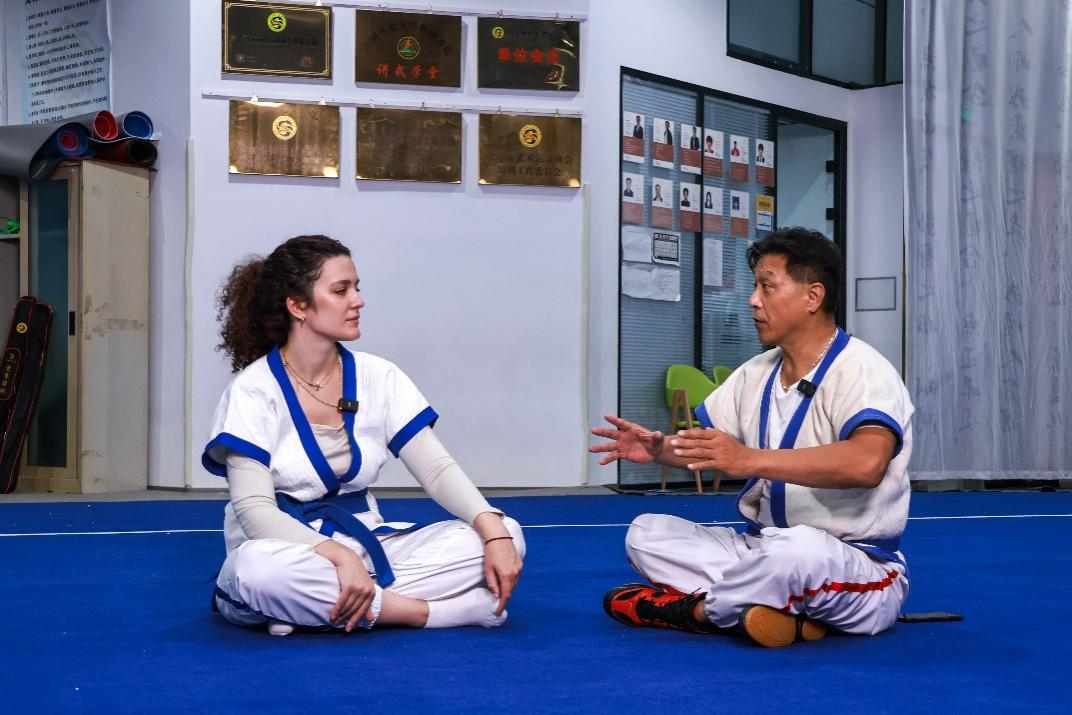
王同庆讲述善扑术背后的中华文化与自身感悟
Wang Tongqing shares the Chinese cultural philosophy behind Shanpu and his personal insights.
北京第二外国语学院塞尔维亚籍教师优万娜慕名而来,成为武馆的特别学员。初识善扑,她从最基础的抱拳礼学起。王同庆亲自示范,既讲规范动作,更阐释其中“以礼为先”的文化内涵。随后,优万娜在其指导下体验善扑术基础动作——从脚步虚实转换到发力巧劲运用——渐次体悟中国式摔跤的精妙。
Drawn by his reputation, Jovana, a Serbian teacher from Beijing International Studies University, came to this Martial Arts Hall as a special student. She began learning with the most basic gesture—the fist-and-palm salute. Mr. Wang’s personally demonstrated, explaining not only the proper form but also the deeper cultural essence of “courtesy first”. Under his guidance, Jovana experienced the fundamental movements of Shanpu—from shifting her weight between steps to applying force with finesse—gradually grasping the intricacies of Chinese-style Wrestling.
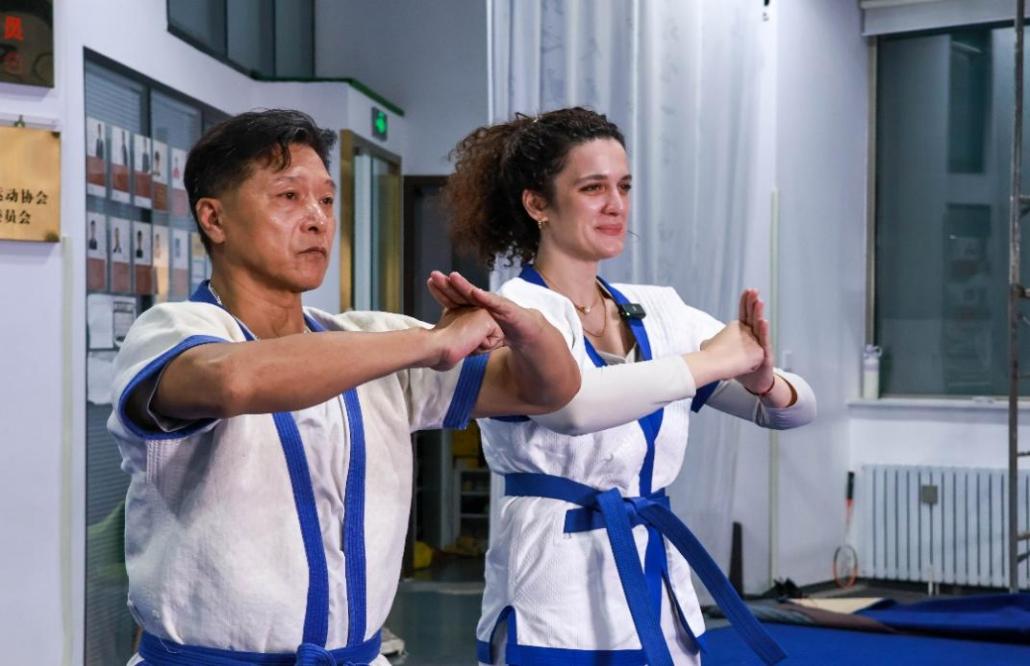
优万娜同王同庆学习抱拳礼
Jovana learns fist-and-palm salute from Mr. Wang
课上,优万娜与一群小朋友并肩训练。孩子们认真示范,扶着她的手臂一同摔倒、一同大笑。优万娜笑着感叹:“他们太可爱了!”不多时,她已掌握善扑术基本要领。一场“趣味切磋”在笑声中展开——优万娜借力一带,干净利落地摔倒对手。空气骤然凝滞,旋即场馆爆发出欢呼:那是孩子们独有的清亮嗓音,如阳光穿透冬日屋檐,明亮、热烈,又真挚。那一刻,力量在交手中流转,情感在笑声里相系,善扑术让心与心贴得更近。
During class, Jovana trained alongside a group of children who patiently guided her by holding her arms as they fell together and laugh together. “They’re so cute! ” she smiled. Soon, she had grasped the basics of Shanpu. A “playful match” unfolded amidst laughter—Jovana used leverage to cleanly throw her opponent. The air momentarily stilled, then the hall burst into cheers: uniquely clear, bright voices of children, like sunlight piercing through winter eaves. In that moment, strength flowed through their moves, and emotion connected through their laughter. Shanpu brought hearts closer together.
在一次次试探与拆解间,优万娜体悟到善扑术“以巧胜力、以礼相搏”的精神。她说:“这项看似比拼力量的技艺,实则藏着中国人处世的智慧与待人的谦和。这样的文化交流,更让清代善扑营的精神,在当代焕发出新生命力。”
Through repeated attempts and analyses, Jovana came to understand the spirit of Shanpu — overcoming strength with skill, engaging with courtesy. “This skill, which seems to be about competing in strength,” she said, “actually embodies Chinese wisdom in conduct and humility in human relations. Such cultural exchanges allow the spirit of the Qing Dynasty’s Shanpu Battalion to thrive with renewed vitality in the modern era.”
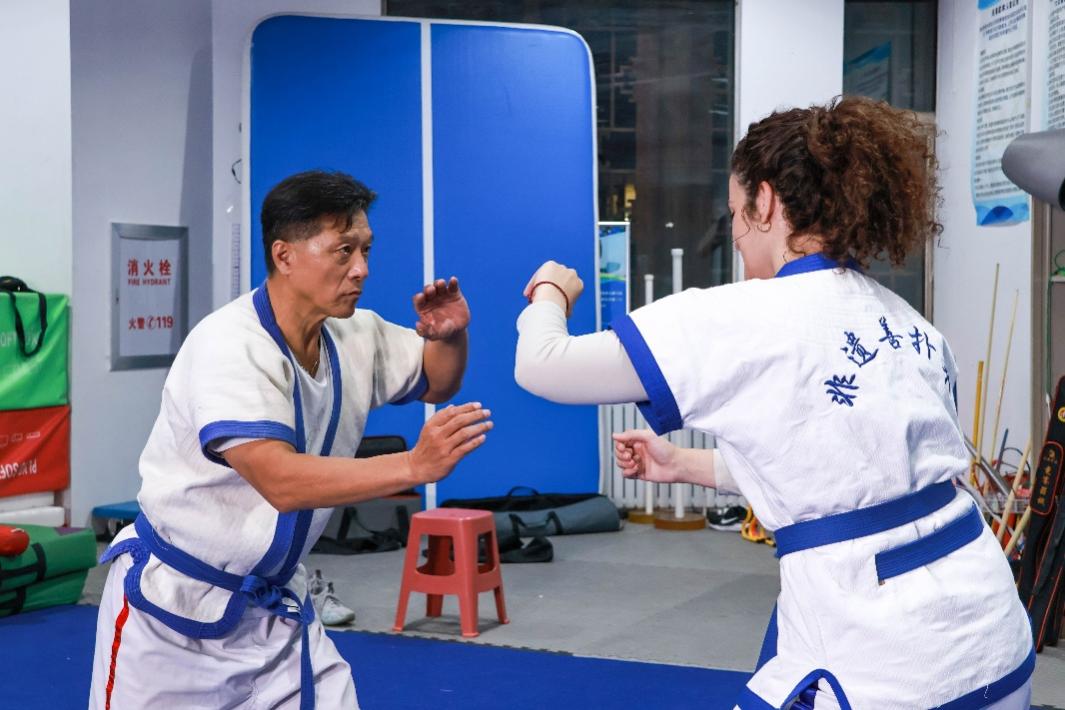
优万娜与王同庆展开了一场“趣味切磋”
Jovana and Wang Tongqing engage in a “playful match”
“让中国式摔跤走向世界,是非遗传承人的责任,更是中华文化的自觉。”在王同庆眼中,善扑术绝非单纯的技艺:从搭手的礼仪、对垒的分寸,到卸力的智慧,皆为“和而不同”的文化体现。学摔跤,不仅是学技巧,更是学做人、学处世——最终习得一份中国式的平衡与分寸。
“Bringing Chinese-sytle Wrestling to the world is not only the responsibility of intangible cultural heritage inheritors, but also an act of cultural awareness of Chinese culture,” said Wang Tongqing. From his perspective, Shanpu is far more than a physical technique—from the handshake before a bout and the measure of restraint during combat to the wisdom in redirecting force—all reflect the Chinese philosophy of “harmony in diversity”. Learning wrestling is not just about mastering techniques, but also about learning to be a person, learning to navigate life, eventually acquiring a Chinese sense of balance and propriety.
如今,冰窖口胡同的檐角下,百年善扑遗风正以新姿赓续。力礼交融,中外相遇,善扑营的回响,正于新时代激荡。
Today, under the curved eaves of Bingjiaokou Hutong, the century-old legacy of Shanpu continues in new forms. As strength intertwines with courtesy and East meets West, the echoes of the Shanpu Battalion resonate vibrantly in the new era.